
If you have any questions, you are always welcome to contact us. We'll get back to you as soon as possible, within 24 hours on weekdays.
-
Shipping Information
Use this text to answer questions in as much detail as possible for your customers.
-
Customer Support
Use this text to answer questions in as much detail as possible for your customers.
-
FAQ’s
Use this text to answer questions in as much detail as possible for your customers.
-
Contact Us
Use this text to answer questions in as much detail as possible for your customers.
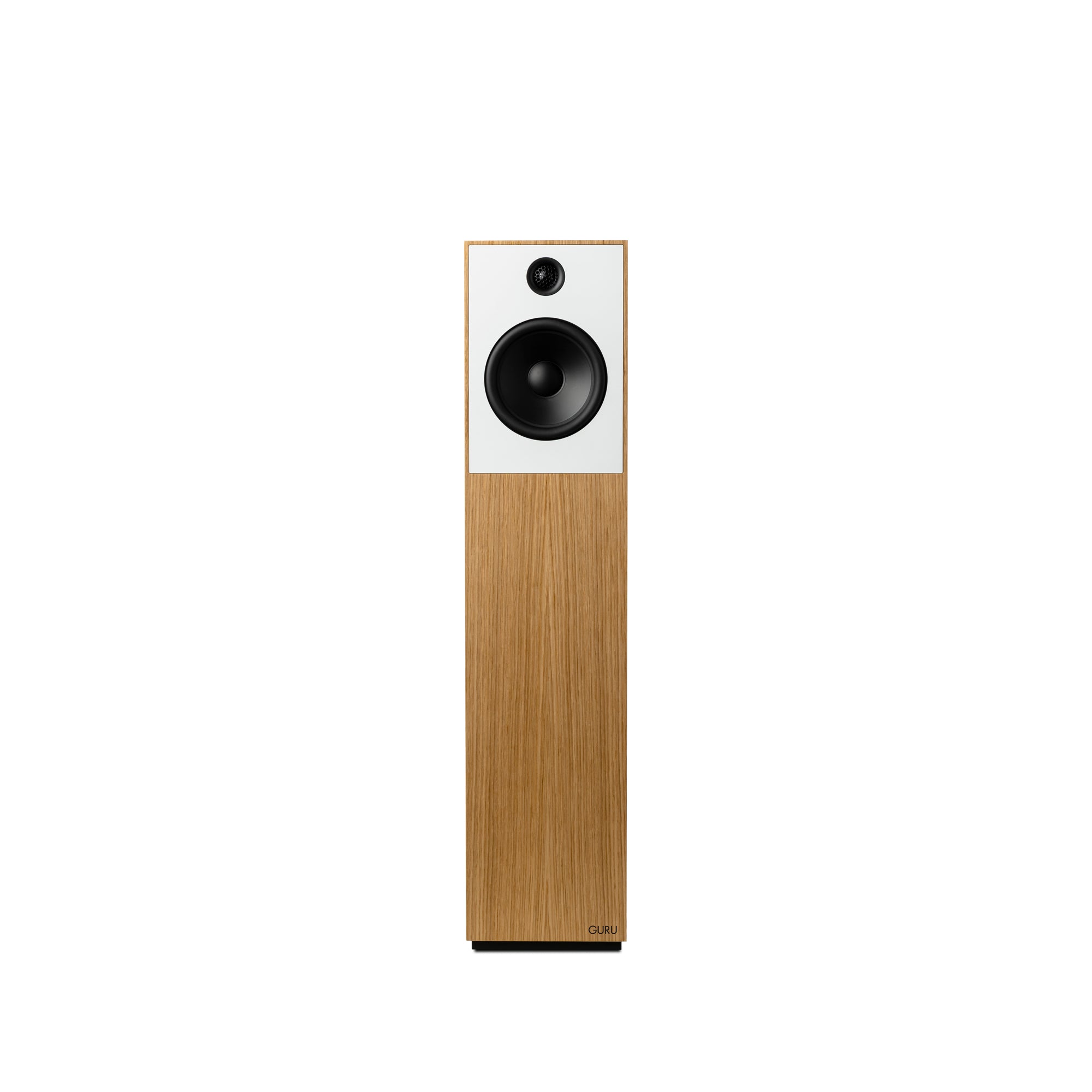
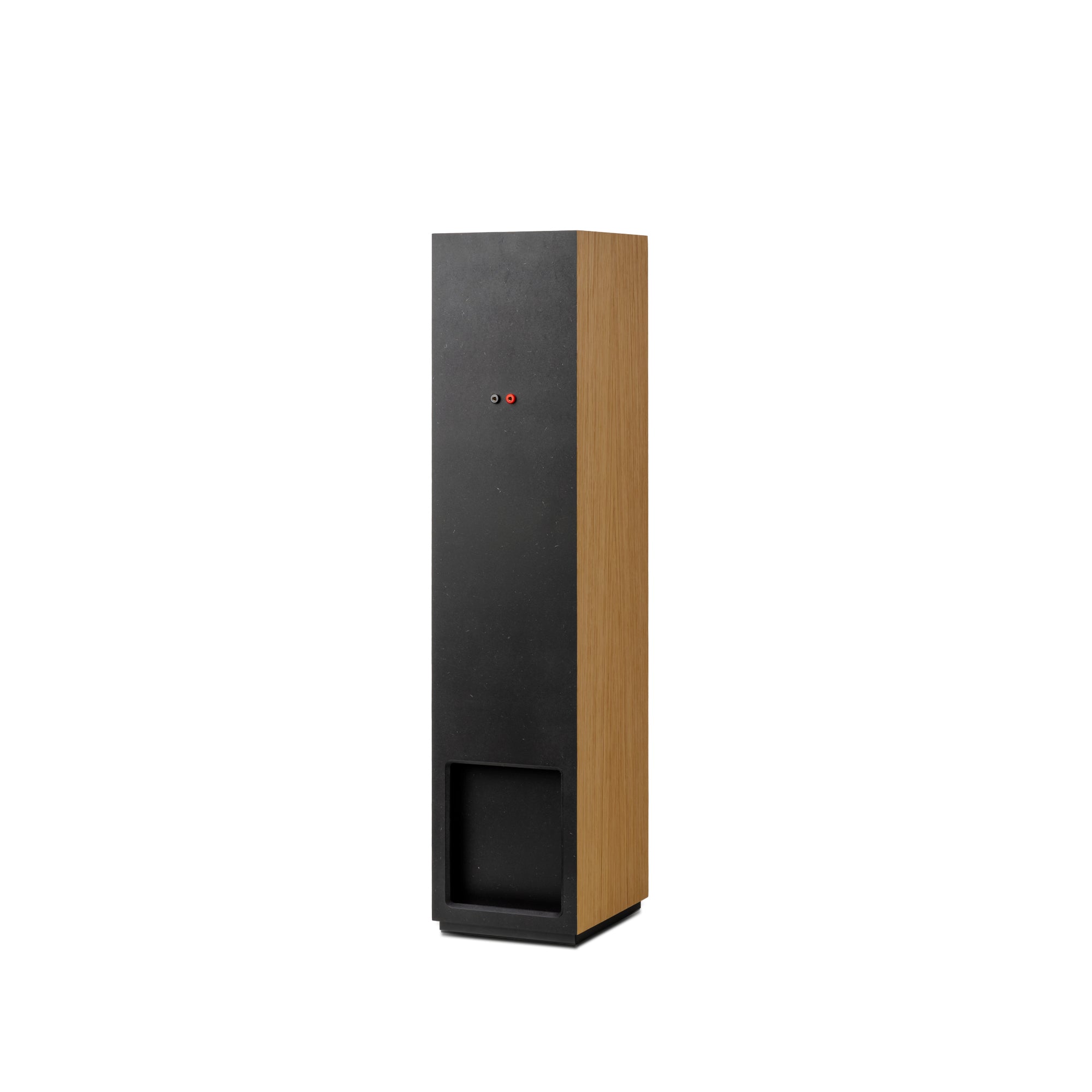
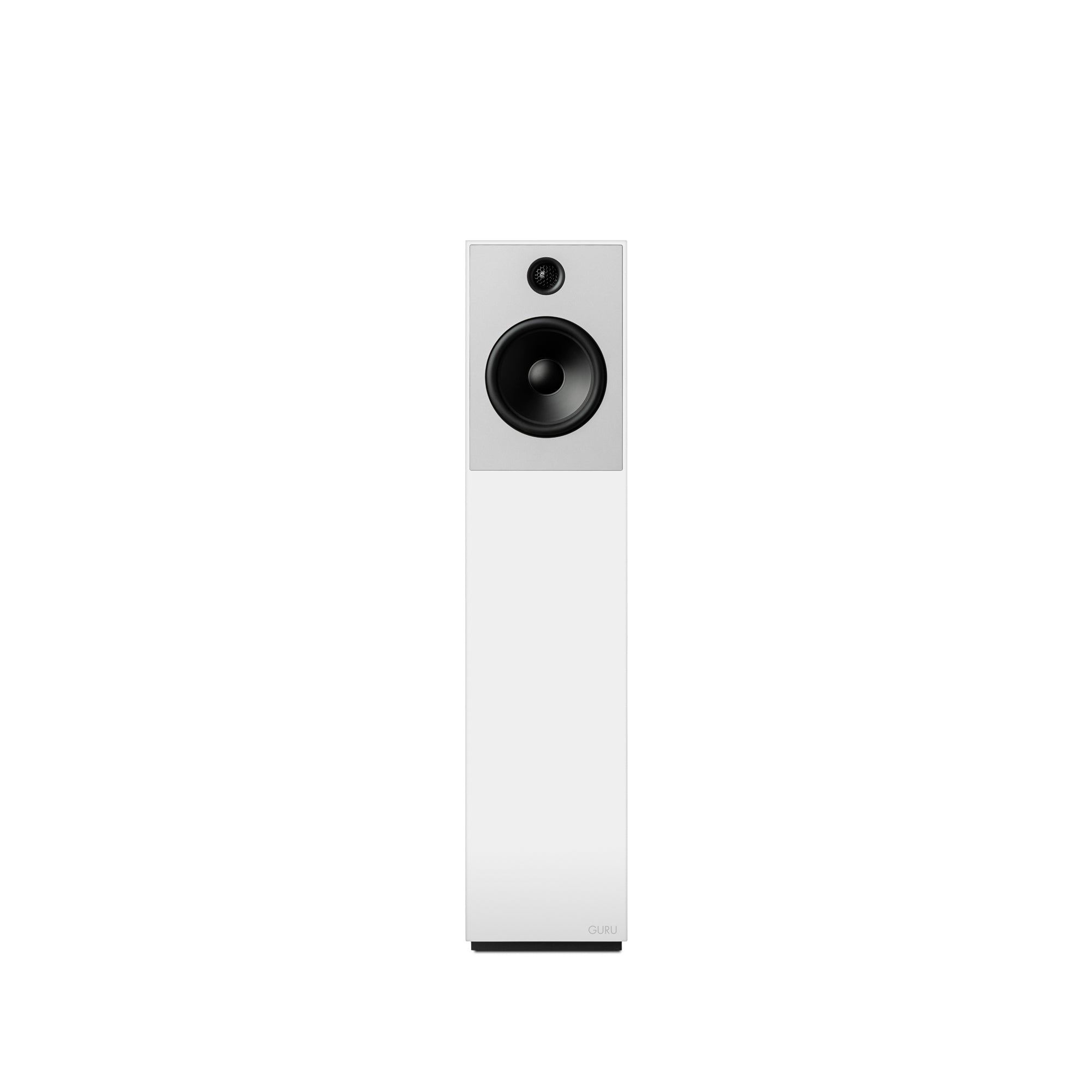
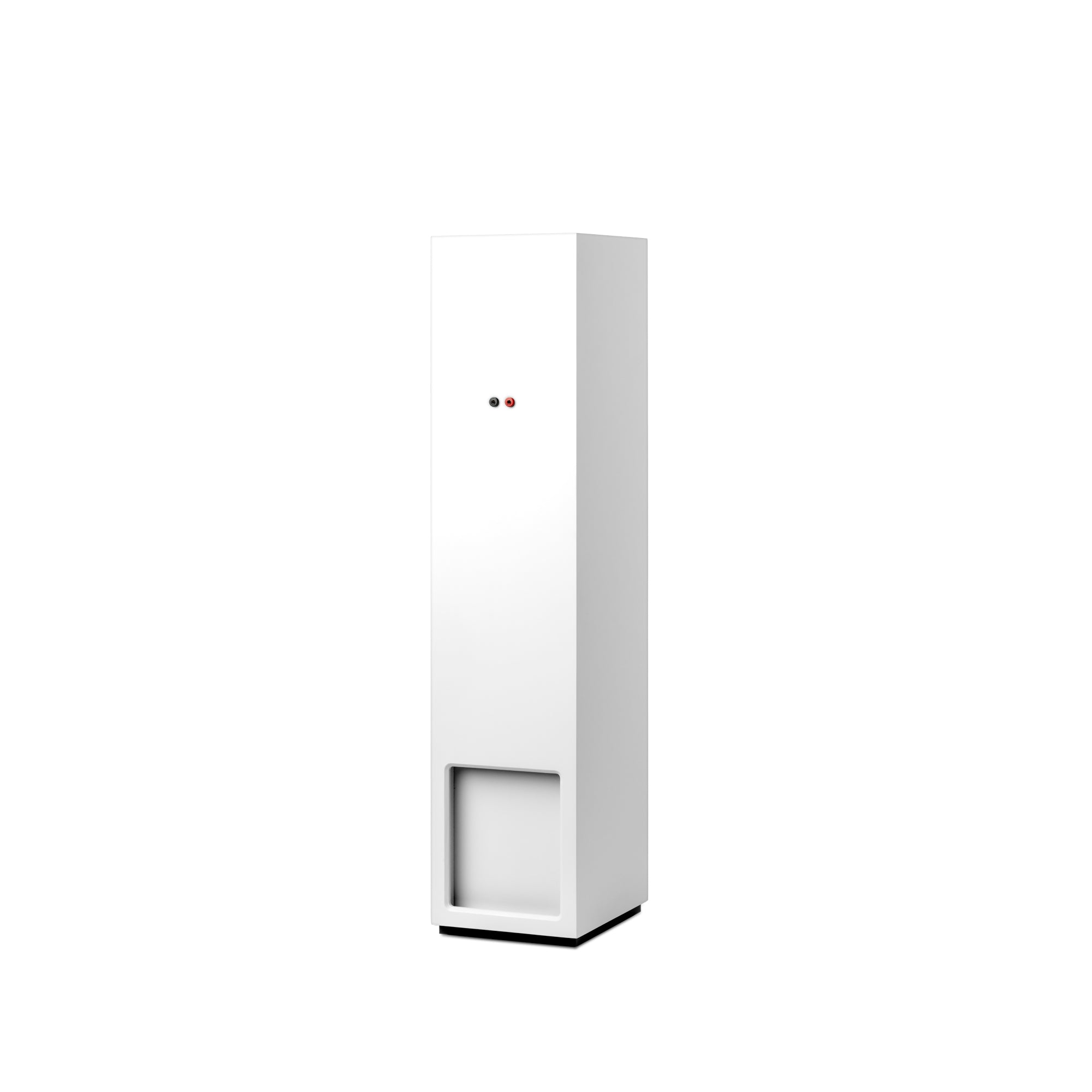
Guru 20 · Swedish floorstander
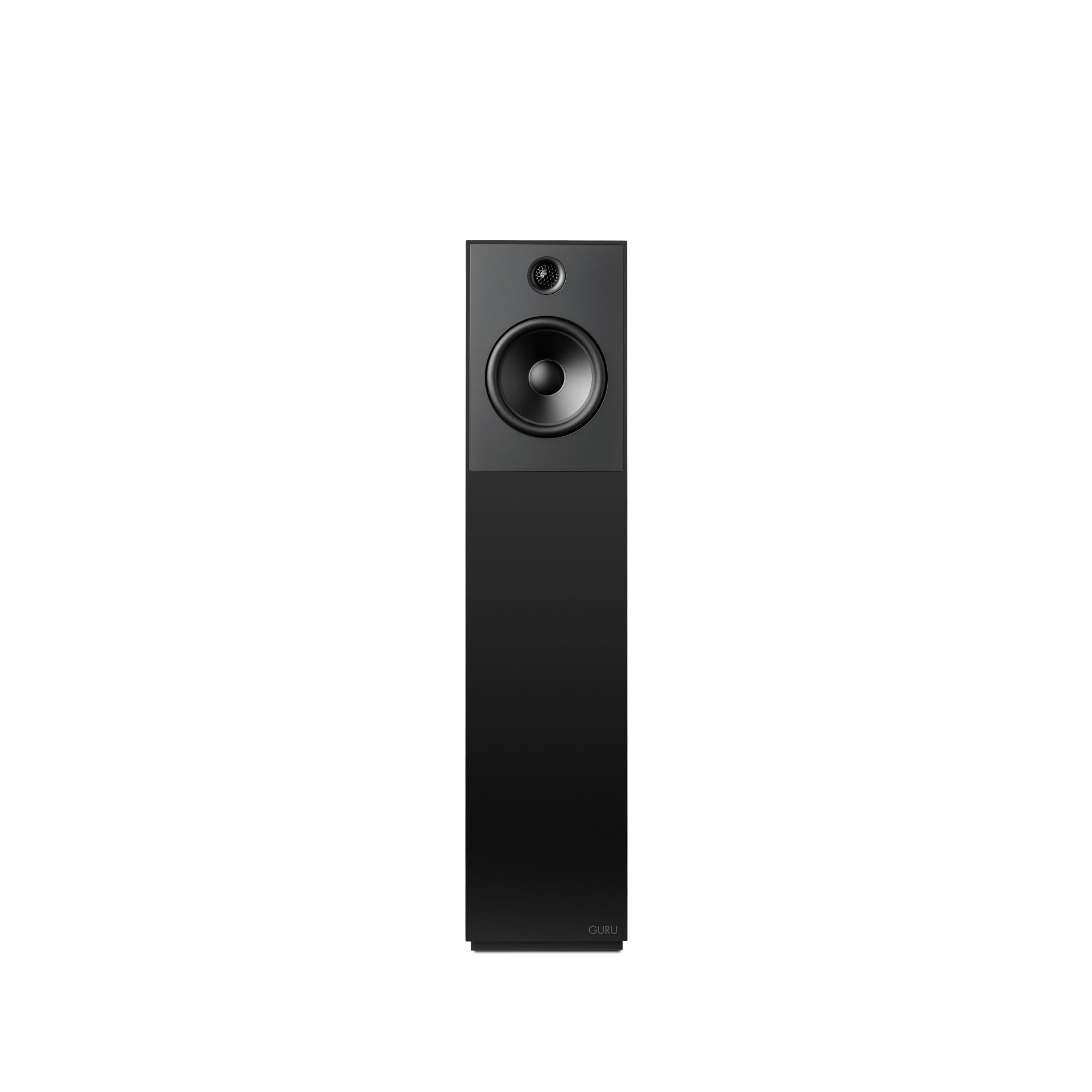
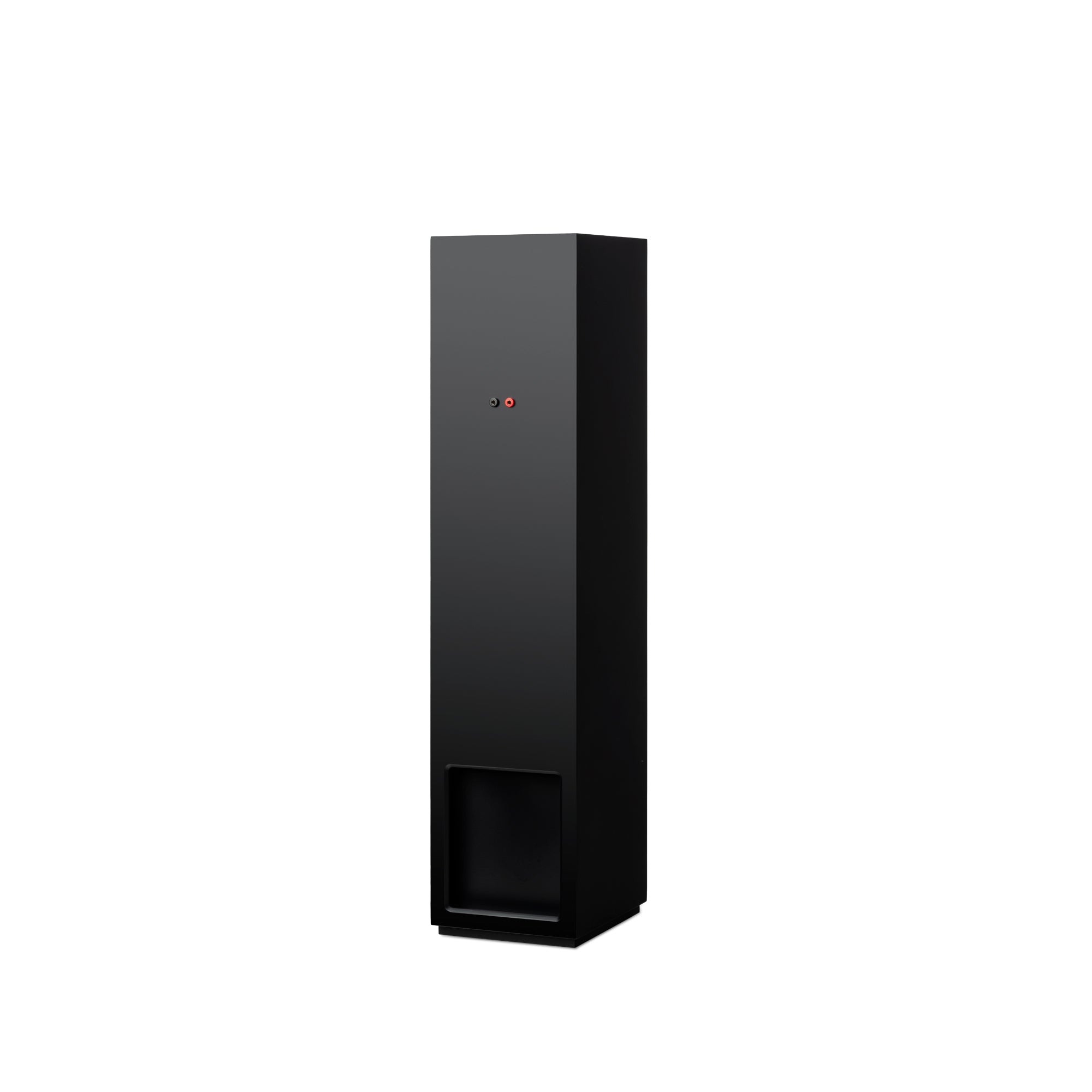
GURU 20 Compact Floorstanding Speaker (Pair)
19 cm wide.
Full-range tall.
A slim tower that disappears against the wall.
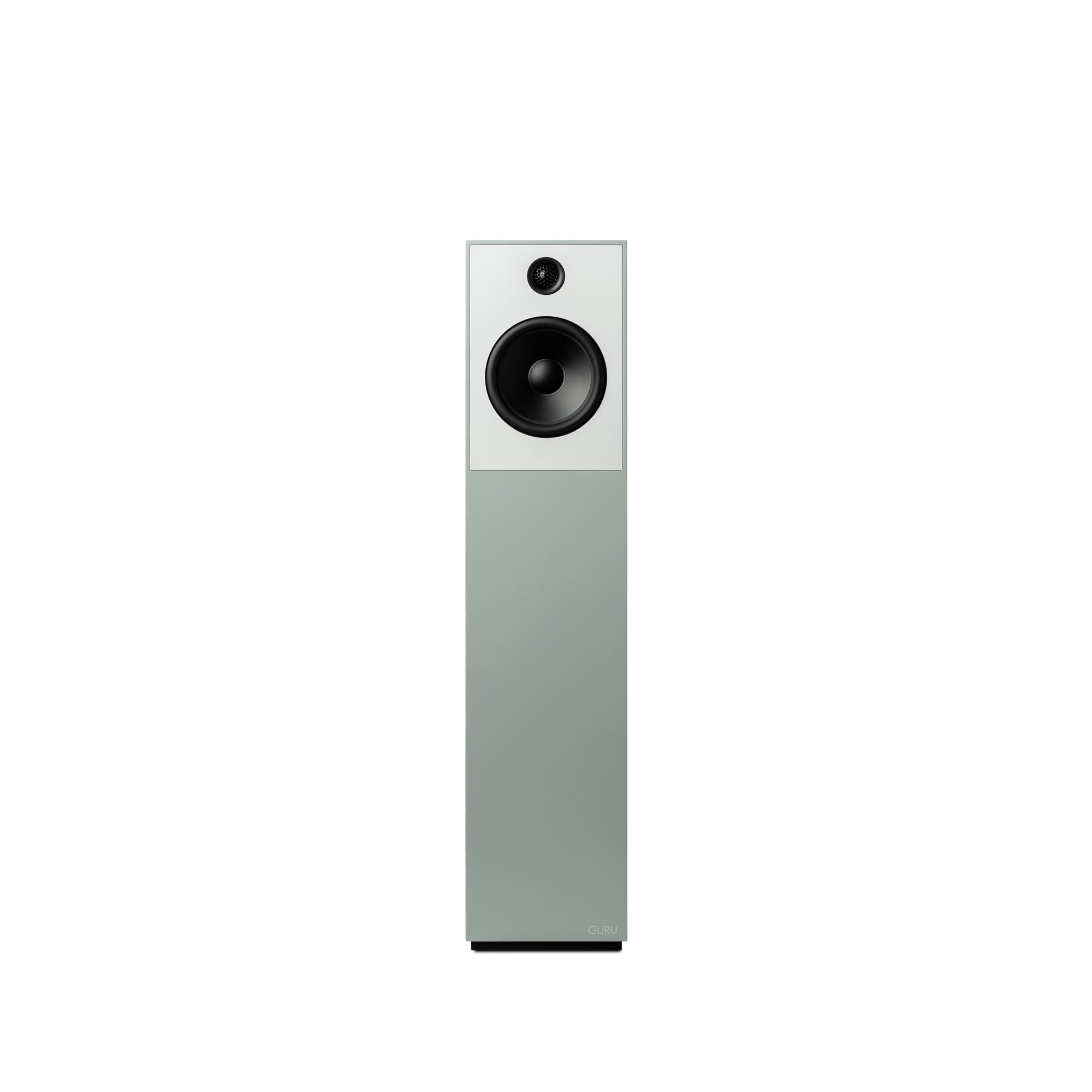
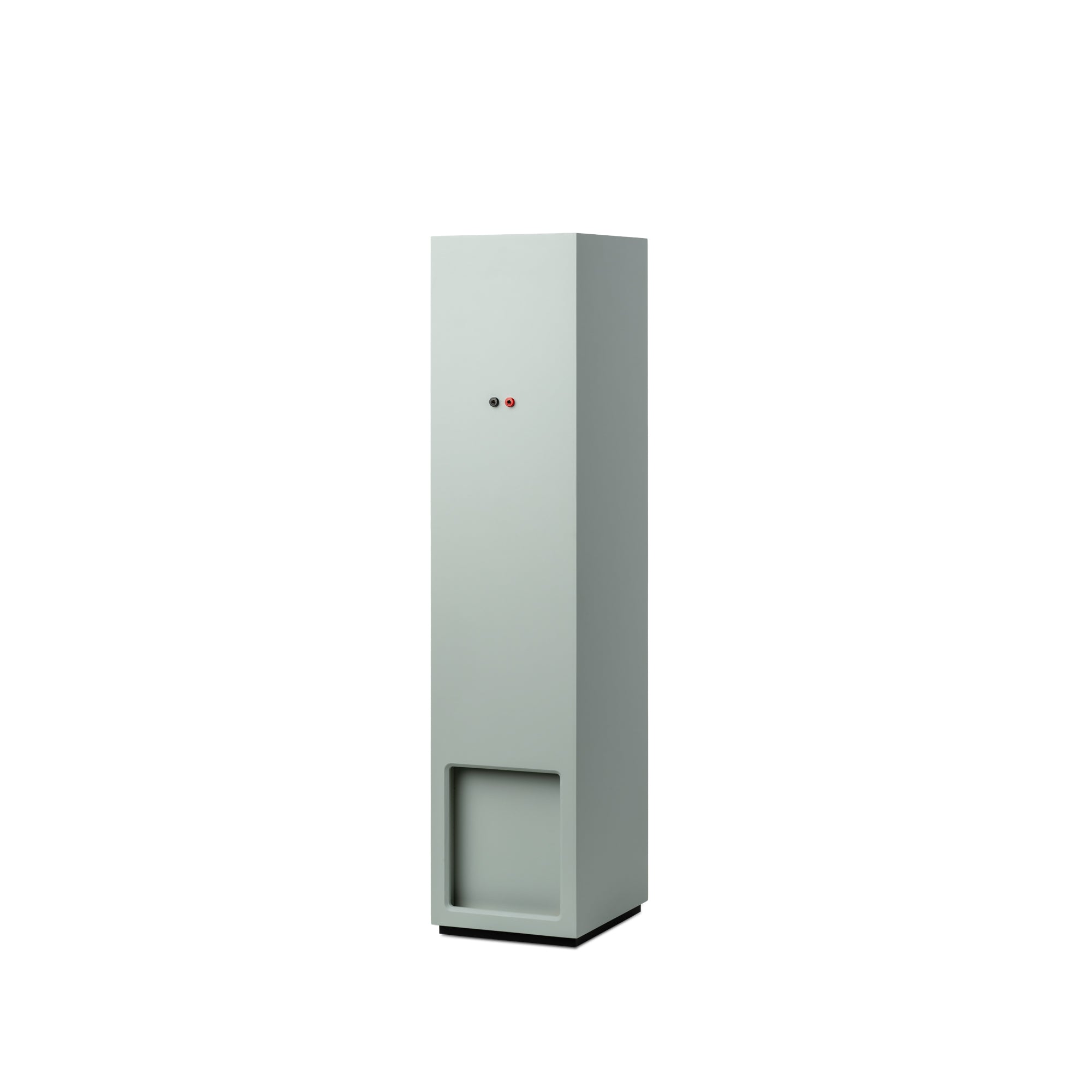
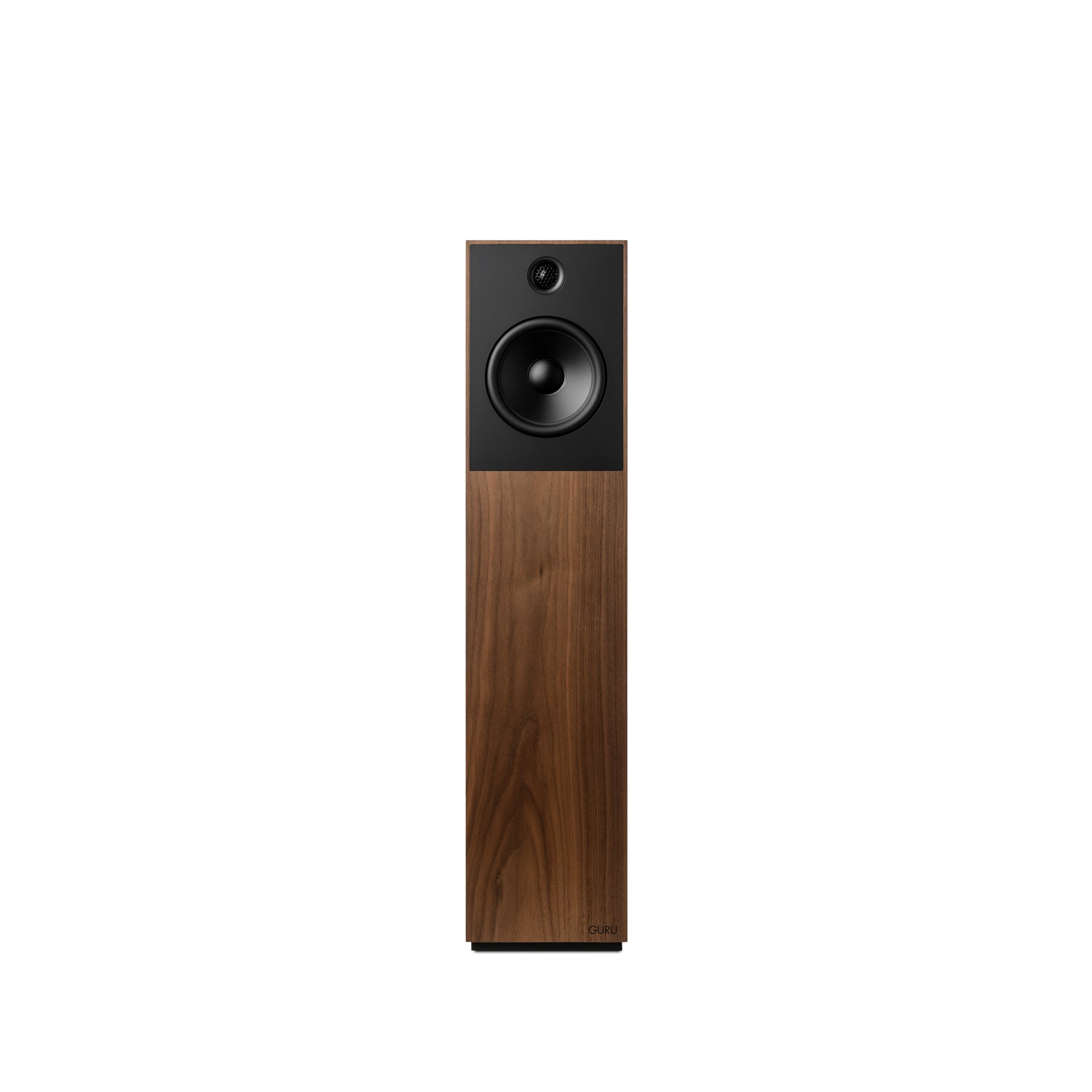
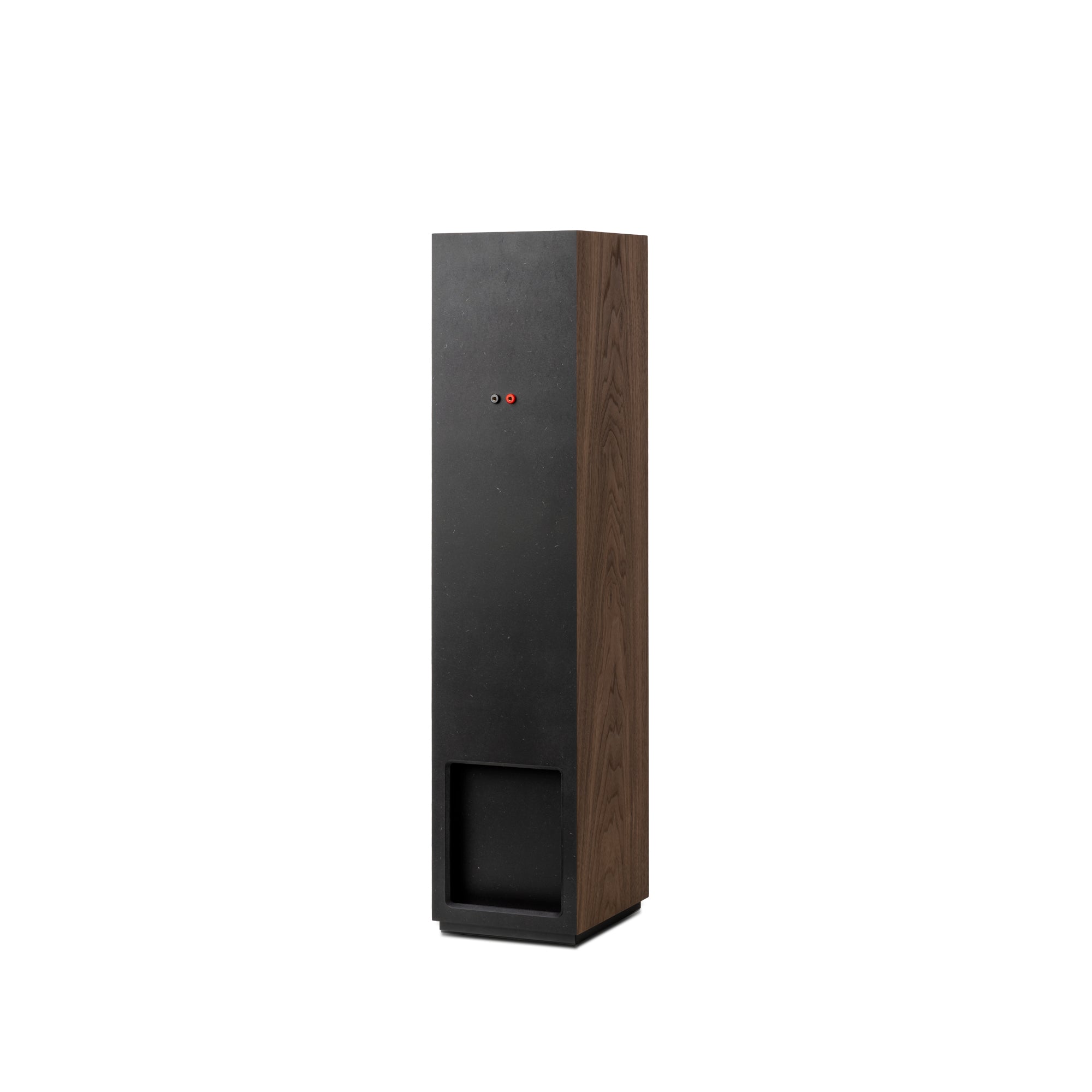
GURU 20 Compact Floorstanding Speaker (Pair)
Pairs well with
Five-year warranty. Designed in Stockholm, hand-made in the EU.
GURU 20 Compact Floorstanding Speaker (Pair)
The room-first idea
Most speakers are
measured in a chamber.
You don't live in one.
Guru was co-founded by psychoacoustics researcher Ingvar Öhman on a single inversion: design for the room people actually have. The rear wall stops being a problem and becomes part of the response — which is why Guru asks you to put the speakers almost against it, under 5 cm, and then set the triangle below.
Setup geometry per Guru's user guide · 1 × apart, 1.2 × back
Toe them in until you can just see the outer side edges from where you sit. Guru builds a sweet field rather than a sweet spot, so more than one seat works. This is a general guide and final placement is subjective. Move them around a little to find the best spot for you. You're the boss.
Three things doing the work
Move Air.
Not furniture.
Genuine bottom-octave bass, in-room — no subwoofer, from a cabinet just 19 cm wide.
A true full-range tower on a footprint smaller than most stand-mount setups. It disappears into the room.
An easy amplifier load — anything from 10 to 160 watts, tube and hybrid designs included.
Technical specifications
| Type | 2-way compact floorstanding loudspeaker |
| Enclosure | Helmholtz resonator, MDF/steel |
| Tweeter | 1 × 19 mm soft dome |
| Mid/woofer | 1 × 125 mm (6″) polypropylene cone |
| Typical in-room response | 28 Hz – 30 kHz |
| Crossover band | 2 – 7 kHz |
| Sensitivity | 88 dB (2.83 V / 1 m) |
| Nominal impedance | 5 ohms (4 ohms minimum) |
| Recommended amplifier power | 10 W – 160 W |
| Dimensions (W × H × D) | 188 × 828 × 220 mm |
| Weight | 10 kg each |
| Placement | Floor, near-wall friendly |
| Finishes | Oak, Walnut, White, Satin Black, Fog |
| Warranty | 5 years |
| Origin | Stockholm, Sweden — hand-made in the EU |
What is the difference between the Guru 12 and Guru 20?
Is the Guru 20 suitable for apartments and small rooms?
Does the Guru 20 need a subwoofer?
Which amplifier should I pair with the Guru 20?
About the GURU 20 Compact Floorstanding Speaker (Pair)
Availability: In stock.
The Floorstander for Rooms That Don't Have Room
Floorstanding sound usually comes with a floorstanding footprint — big boxes, big spacing demands, big negotiations with whoever shares your living room. The Guru 20 ends the negotiation. Guru Audio's most compact floorstanding speaker takes the acclaimed drivers from the Guru 12 stand-mount — the proprietary 6" (125 mm) mid/bass unit and precision soft-dome tweeter — and houses them in a slim tower barely 19 cm wide, unlocking in-room bass extension down to a genuinely deep 28 Hz. Full-range Swedish sound, standing on a footprint smaller than most stand-mount-plus-stand combinations. Designed, as Guru puts it, with true connoisseurs in mind.
Room-First Engineering, Tower Edition
Like every Guru, the 20 breaks with speaker-industry convention. Where most floorstanders are voiced in anechoic chambers and then demand a metre or more of breathing space from every wall, Guru — co-founded by psychoacoustics engineer Ingvar Öhman — designs its speakers to perform correctly in real, furnished rooms, placed just centimetres from the wall behind them. The Helmholtz resonator cabinet and wide 2–7 kHz crossover band shape the speaker's dispersion so the towers acoustically disappear, projecting a tall, stable, three-dimensional soundstage that holds together whether you're seated, standing, or halfway through hosting a dinner party.
The practical payoff is enormous: a true full-range floorstander that lives happily against the wall in apartments, condos, and real living rooms — no subwoofer, no stands to buy, no acoustic redecorating required.
Slim, Scandinavian, and Seriously Handsome
At 83 cm tall and just 19 cm wide, the Guru 20 is Scandinavian design at its most disciplined — a clean, slender monolith in real oak or walnut veneer, or painted white, satin black, and Fog grey, with Guru's signature contrasting baffle detail. Penned by Konstfack-trained industrial designer Erik Espmark, it's a speaker conceived as furniture: something that belongs in a beautiful room rather than apologizing to it. Reviewers have compared Guru's restrained aesthetic to the Dieter Rams school of design, and the 20 is the thesis statement.
Why You'll Love the Guru 20
- True full-range sound — in-room response from 28 Hz to 30 kHz, no subwoofer needed
- Compact tower footprint — just 188 mm wide × 220 mm deep; smaller than most stand-mount setups
- Proven Guru 12 drivers — proprietary 6" (125 mm) mid/bass and soft-dome tweeter
- Wall-friendly by design — engineered for placement centimetres from the wall
- Sit-or-stand soundstage — controlled dispersion preserves imaging at any listening height
- Easy amplifier load — 88 dB sensitivity, happy with anything from 10 to 160 W
- Designed in Stockholm, hand-made in the EU — Scandinavian standards, designed to last
Frequently Asked Questions
What's the difference between the Guru 12 and Guru 20?
They share the same proprietary 6" mid/bass driver and tweeter, but the Guru 20's larger floorstanding cabinet extends bass from 30 Hz down to 28 Hz and adds greater scale and ease — while eliminating the need for stands. Choose the 12 for shelf placement, the 20 for floor placement.
Is the Guru 20 suitable for apartments and small rooms?
Ideally so. Its slim cabinet, near-wall placement design, and controlled bass make it one of the most apartment-friendly floorstanding speakers available — full-range sound without dominating the space or the neighbours' patience at moderate volumes.
Does the Guru 20 need a subwoofer?
No. With genuine in-room extension to 28 Hz, the Guru 20 reproduces the full bottom octave of virtually all music on its own.
What amplifier should I pair with the Guru 20?
Anything from 10 to 160 watts per channel. With 88 dB sensitivity and a benign 4-ohm minimum impedance, it pairs beautifully with quality integrated amplifiers, including tube and hybrid designs. More power provides more flexibility in terms of room size and dynamics.
Footnote: the 10-watt Soulnote A-0 ver.2 is a perfect match.
Downloads
Download the Guru Floorstander User Guide (PDF) — setup, connection, placement, and specifications for the Guru 20, 28, and 42.