
If you have any questions, you are always welcome to contact us. We'll get back to you as soon as possible, within 24 hours on weekdays.
-
Shipping Information
Use this text to answer questions in as much detail as possible for your customers.
-
Customer Support
Use this text to answer questions in as much detail as possible for your customers.
-
FAQ’s
Use this text to answer questions in as much detail as possible for your customers.
-
Contact Us
Use this text to answer questions in as much detail as possible for your customers.
無帰還 · No Feedback
Soulnote D-1N ver.2 D/A Converter
One chip.
One channel. No feedback.
The Soulnote D-1N ver.2 is a perfectly balanced, completely non-NFB D/A converter — Soulnote's reference thinking, distilled.
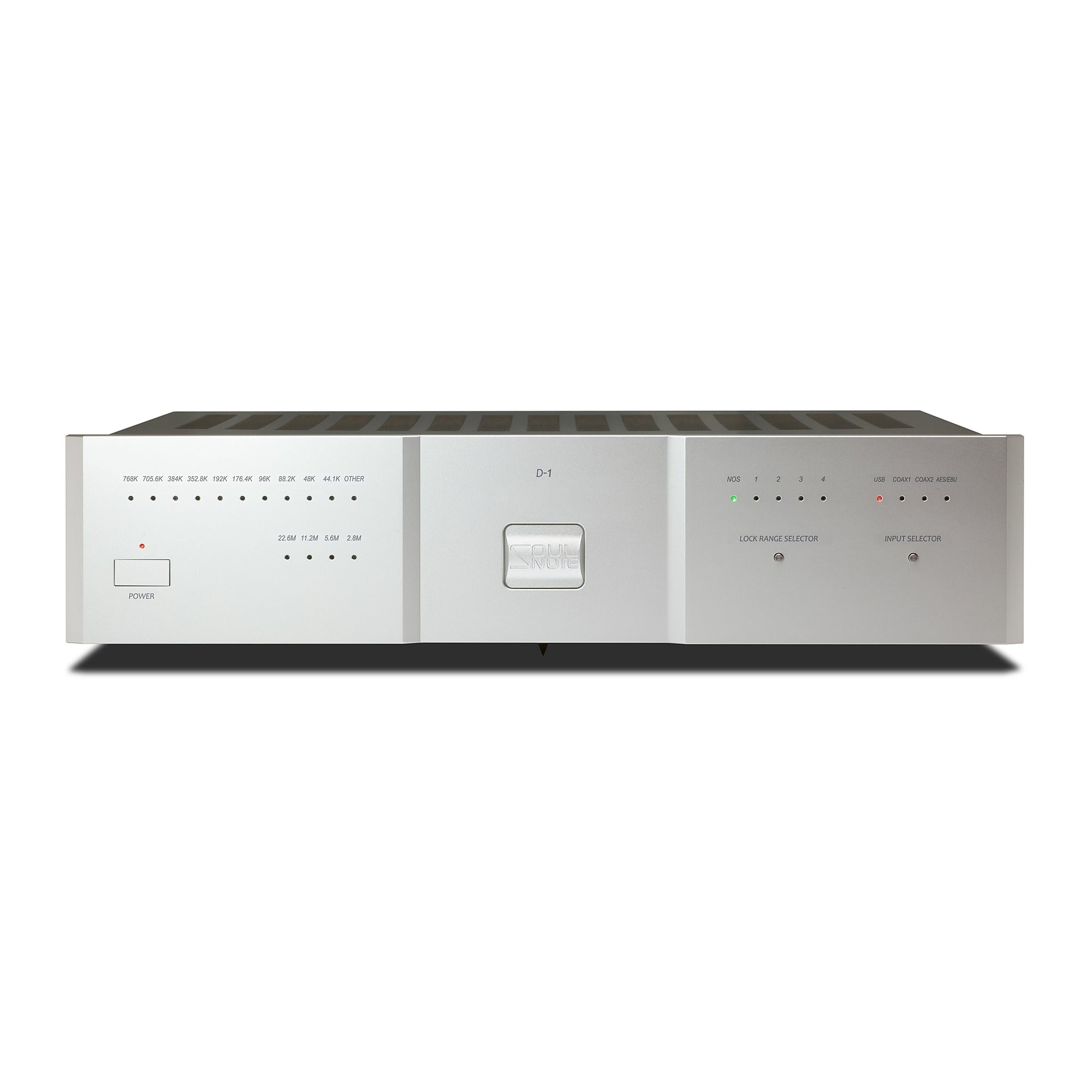
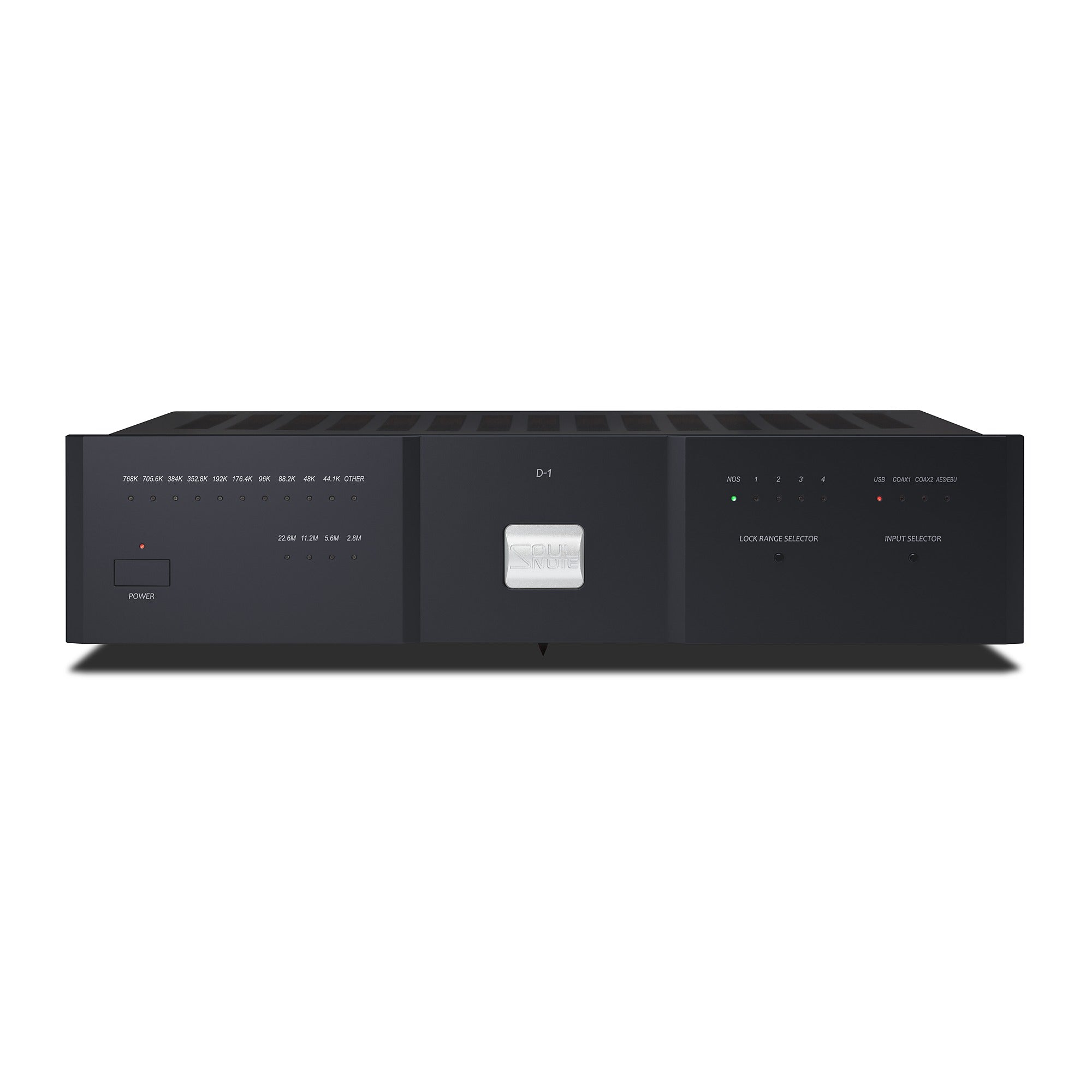
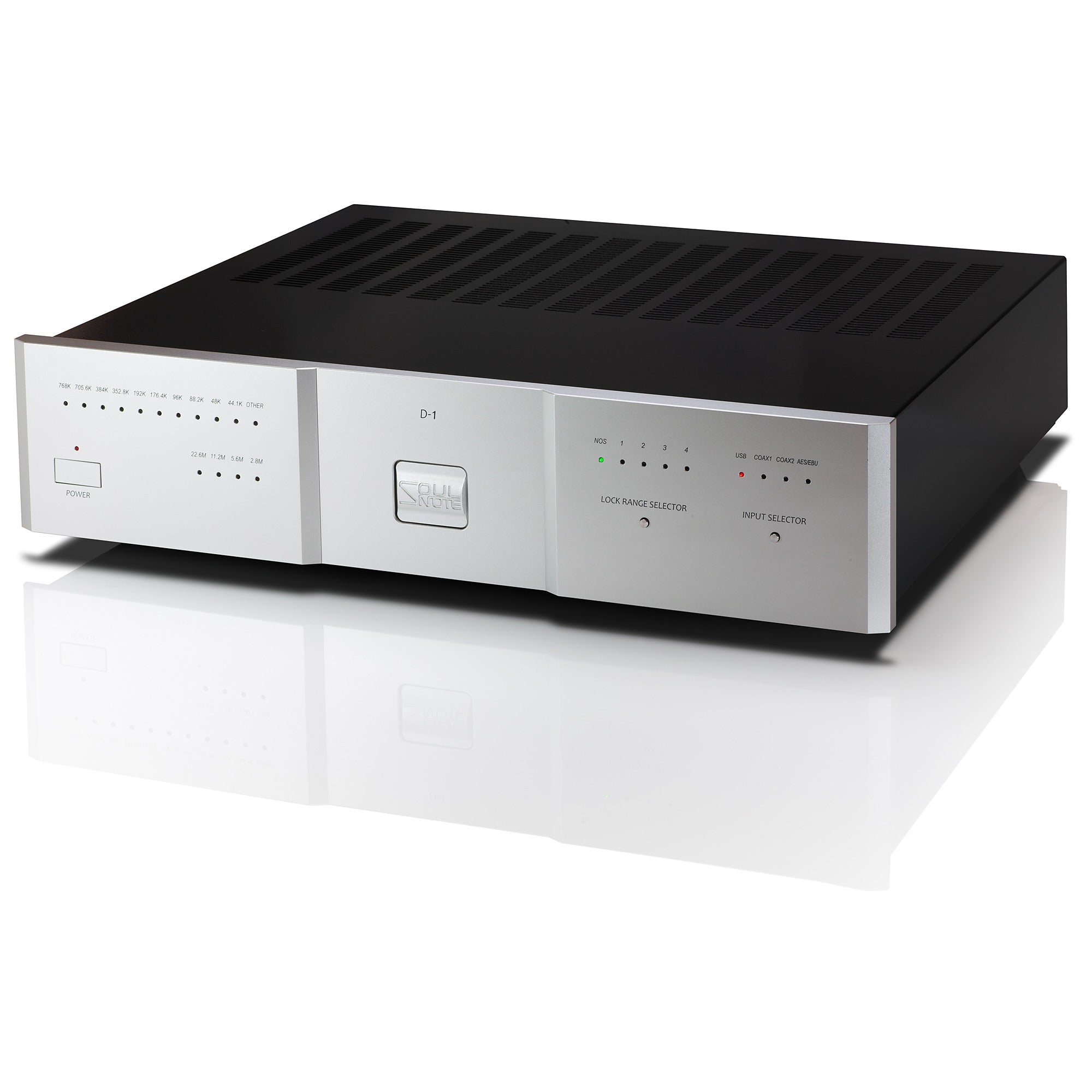
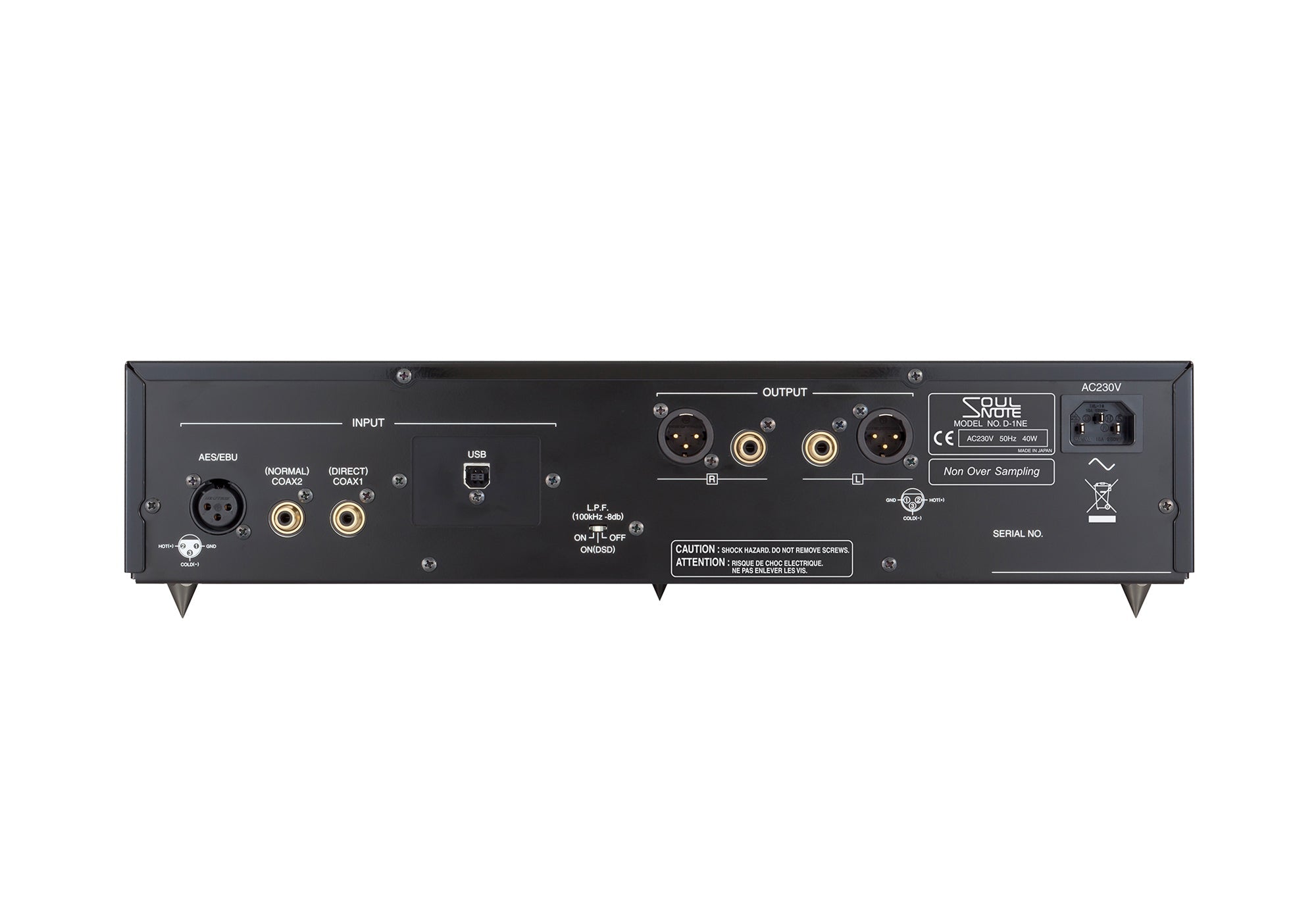
Soulnote D-1N ver.2 D/A Converter
Pairs well with
Hand-built in Japan. Every part chosen by ear.
Soulnote D-1N ver.2 D/A Converter
無 Nothing in the way
Everyone adds.
Soulnote subtracts.
The best producers know the secret: the art is what you leave out. Soulnote engineers the same way — every stage a conventional design adds to the signal path is a chance to blur the original waveform, so Soulnote removes them, one by one, and tunes what remains by ear.
Between input and output: 4 extra stages, each with a fingerprint. Between input and output: almost nothing.
Every stage does a job — and leaves a fingerprint on the waveform as it passes through.
Fewer hands on the signal. What remains was chosen by listening — part by part.
Designed by subtraction
Less circuit.
More music.
dynamic range — a full ES9038PRO per channel, run in monaural mode.
clock jitter, from ultra-low-jitter crystal oscillators.
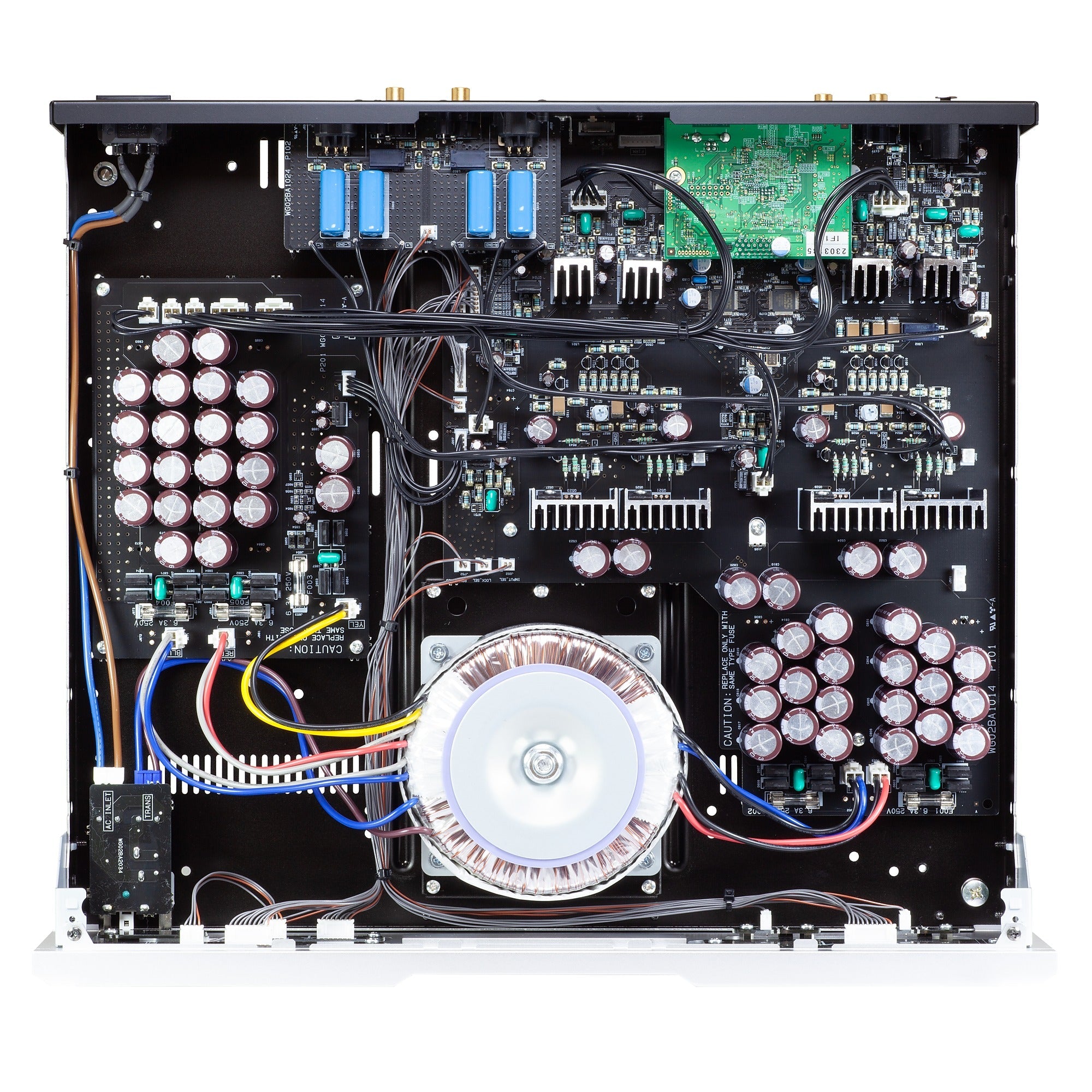
toroidal transformer feeding eight independently regulated power supplies.
Technical specifications
| DAC | 2 x ESS ES9038PRO (monaural, one per channel) |
| Circuit topology | Perfectly balanced, discrete, completely non-NFB |
| Dynamic range | 140dB |
| PCM support | USB up to 32-bit/768kHz; Coax/AES-EBU up to 24-bit/192kHz |
| DSD support | USB up to 22.6MHz (DSD512); Coax/AES-EBU DSD64 (DoP) |
| Digital inputs | USB 2.0 Type B (UAC2), Coaxial x2 (SPDIF), AES/EBU |
| Analog outputs | XLR (5.6 Vrms), RCA (2.8 Vrms) |
| Clock | Ultra-low-jitter crystals, <1ps phase jitter; NOS mode selectable |
| Power supply | 260VA toroidal transformer, 8 independent discrete regulators |
| Weight | 10 kg |
Which converters does it use?
What formats and rates does it accept?
How does it differ from the D-2 ver.2?
About the Soulnote D-1N ver.2 D/A Converter
Availability: Ships in 10–15 business days.
A Non-NFB Reference DAC, Distilled
The Soulnote D-1N ver.2 takes the design language of Soulnote's reference converters and brings it within reach. Like every Soulnote component, it's a perfectly balanced, discrete, completely non-NFB D/A converter — engineered by ear, not for the measurement bench. A dual ES9038PRO configuration runs one chip per channel in monaural mode, unlocking a huge 140dB dynamic range and the vivid, spacious, utterly natural sound that defines the brand.
Twin ES9038PRO, Run in Mono
Using a full ES9038PRO DAC for each channel — rather than sharing a single chip across both — dramatically improves separation and lowers noise, giving the D-1N ver.2 its expansive, precisely focused soundstage. Ultra-low-jitter crystal oscillators with phase jitter under 1 picosecond clock the conversion, while a two-dimensional passive analog filter and a selectable NOS (non-oversampling) mode let you voice the presentation to your taste and your recordings.
Engineered Without Compromise
Behind the front panel sits a 260VA large-scale toroidal transformer feeding eight independent power supplies with discrete regulators — an unusually lavish arrangement for the money. High-resolution files are handled effortlessly: PCM to 32-bit/768kHz and DSD to 22.6MHz (DSD512) over USB, using Soulnote's Bulk Pet transfer method, plus coaxial and AES/EBU inputs with four-stage lock-range switching. Balanced XLR and single-ended RCA outputs make integration simple.
Why You'll Love the D-1N ver.2
- Dual ES9038PRO (one per channel, monaural) for 140dB dynamic range
- Completely non-NFB, perfectly balanced discrete analog stage
- PCM to 32-bit/768kHz and DSD512 over USB, plus coax and AES/EBU
- Selectable NOS mode and ultra-low-jitter (<1ps) crystal clocking
- 260VA toroidal transformer with eight discretely regulated power supplies
Frequently Asked Questions
Which DAC chips does the D-1N ver.2 use?
Two ESS ES9038PRO converters — one dedicated to each channel in monaural mode — which improves channel separation and lowers the noise floor for a wider, cleaner soundstage.
What file formats and sample rates are supported?
Over USB, PCM up to 32-bit/768kHz and DSD up to 22.6MHz (DSD512). Coaxial and AES/EBU inputs accept PCM to 24-bit/192kHz and DSD64 (DoP).
What is NOS mode?
NOS (non-oversampling) mode bypasses digital oversampling for a more direct, analog-like presentation. The D-1N ver.2 lets you switch it in or out to suit your system and recordings.