
If you have any questions, you are always welcome to contact us. We'll get back to you as soon as possible, within 24 hours on weekdays.
-
Shipping Information
Use this text to answer questions in as much detail as possible for your customers.
-
Customer Support
Use this text to answer questions in as much detail as possible for your customers.
-
FAQ’s
Use this text to answer questions in as much detail as possible for your customers.
-
Contact Us
Use this text to answer questions in as much detail as possible for your customers.
Guru 12 · Swedish stand-mount
Guru 12 Stand-Mount Loudspeaker (Pair)
Stand-mount size.
Floorstander scale.
Five centimetres from your wall.
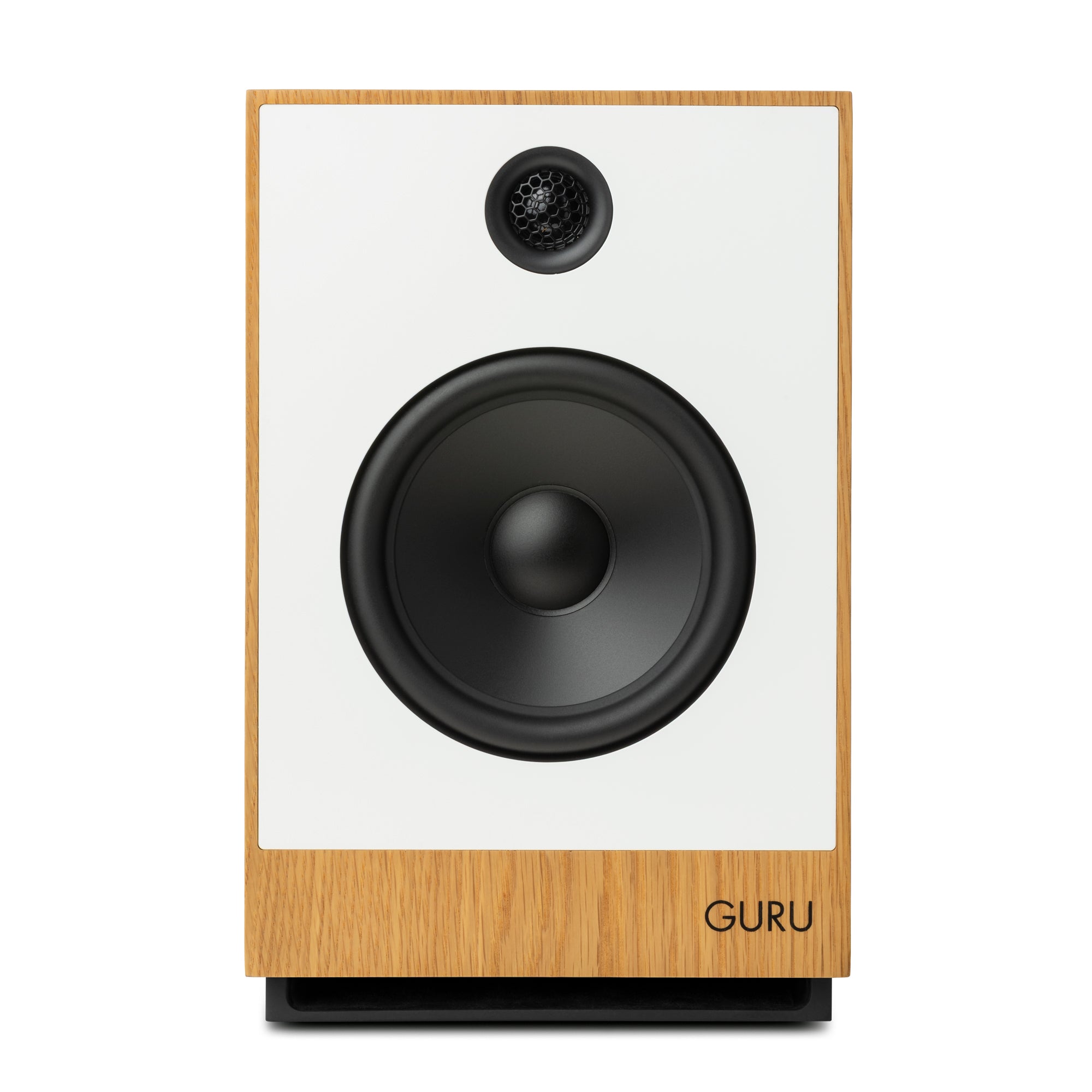
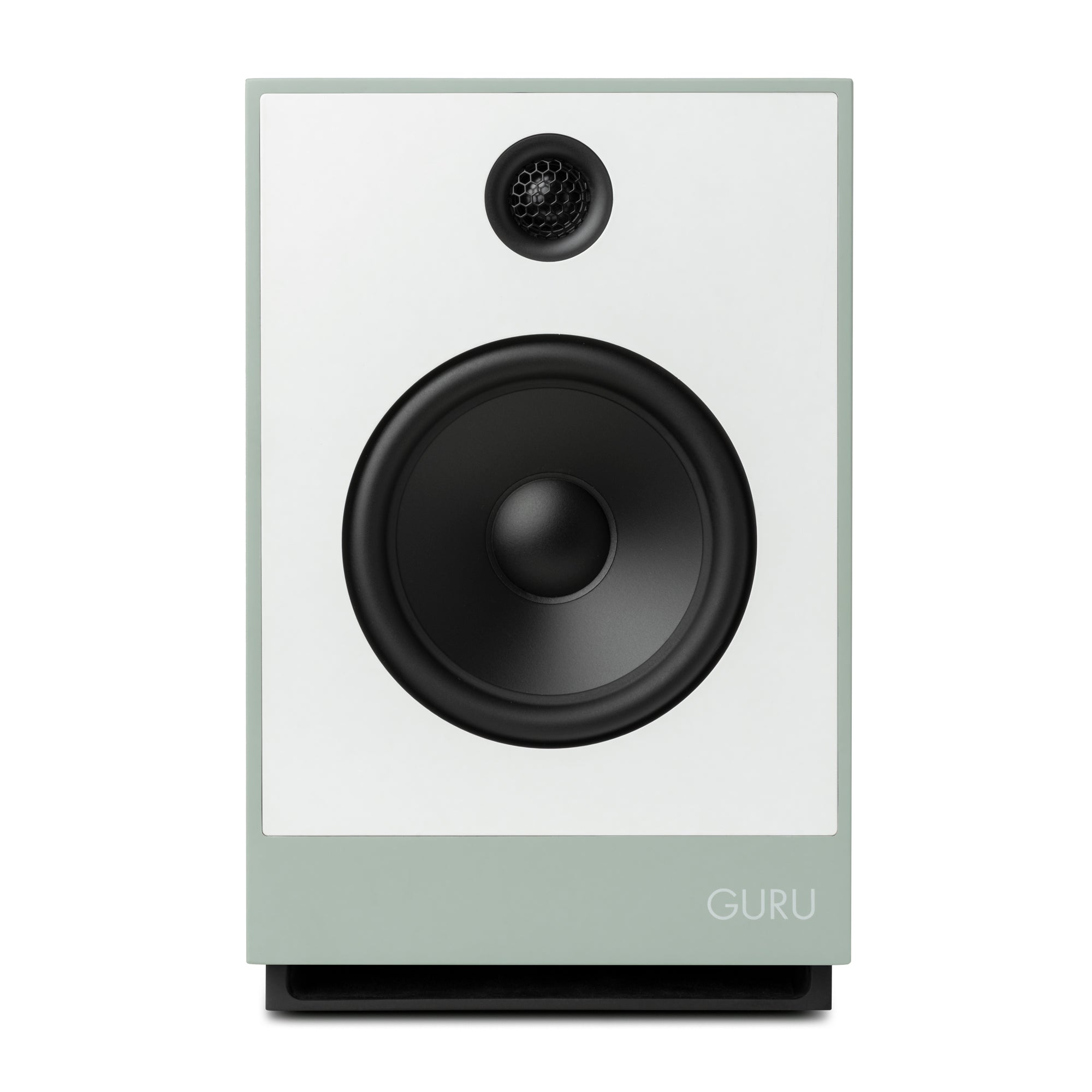
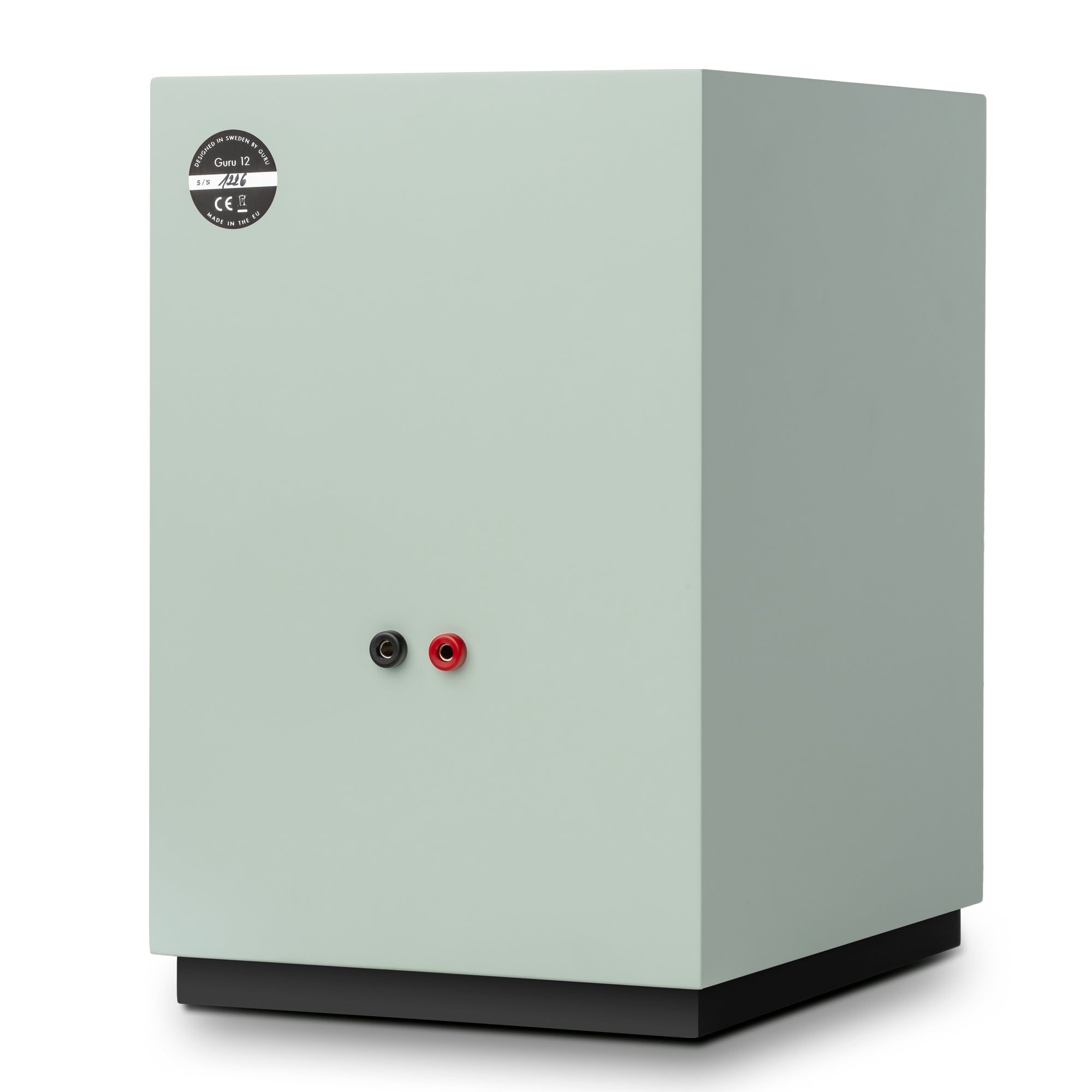
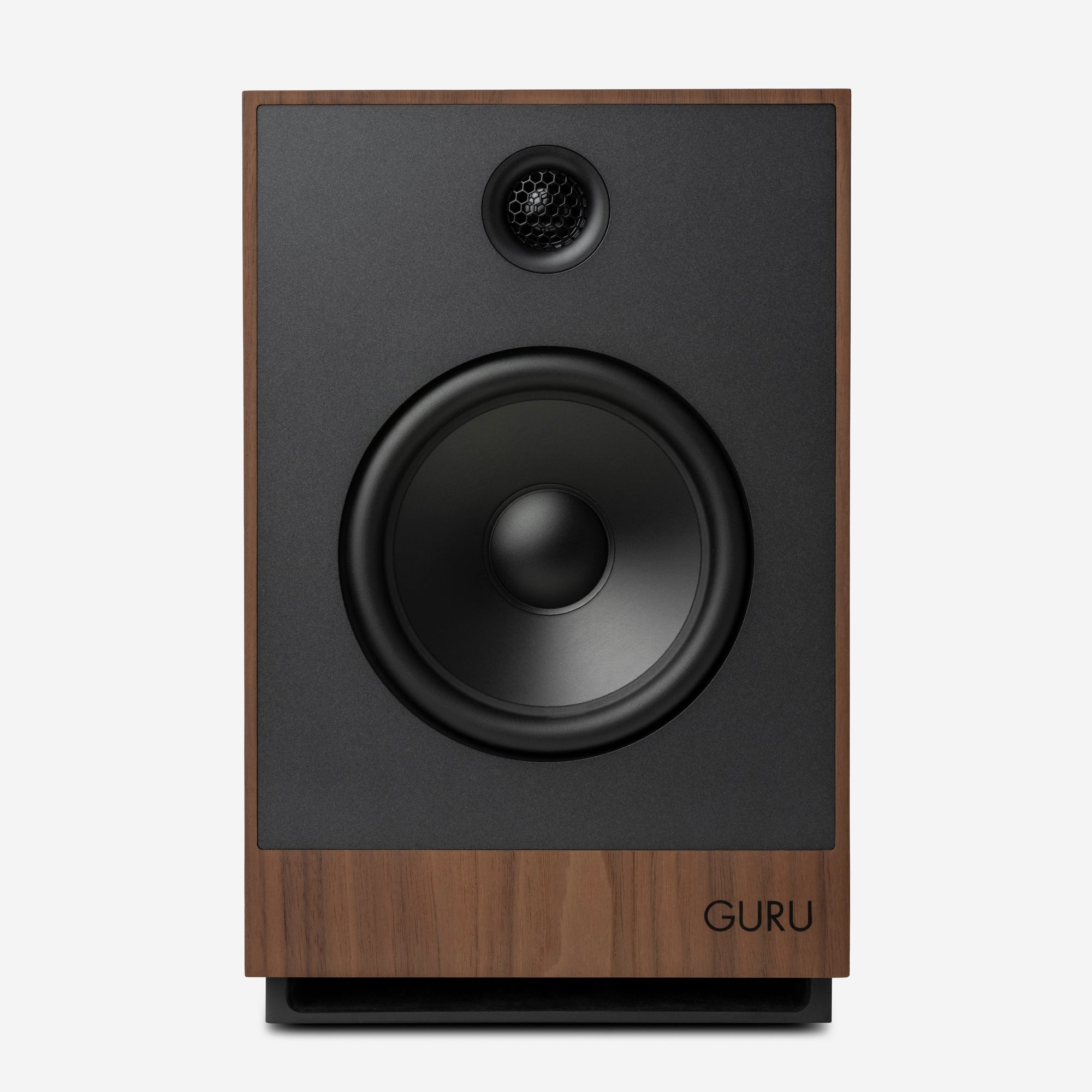
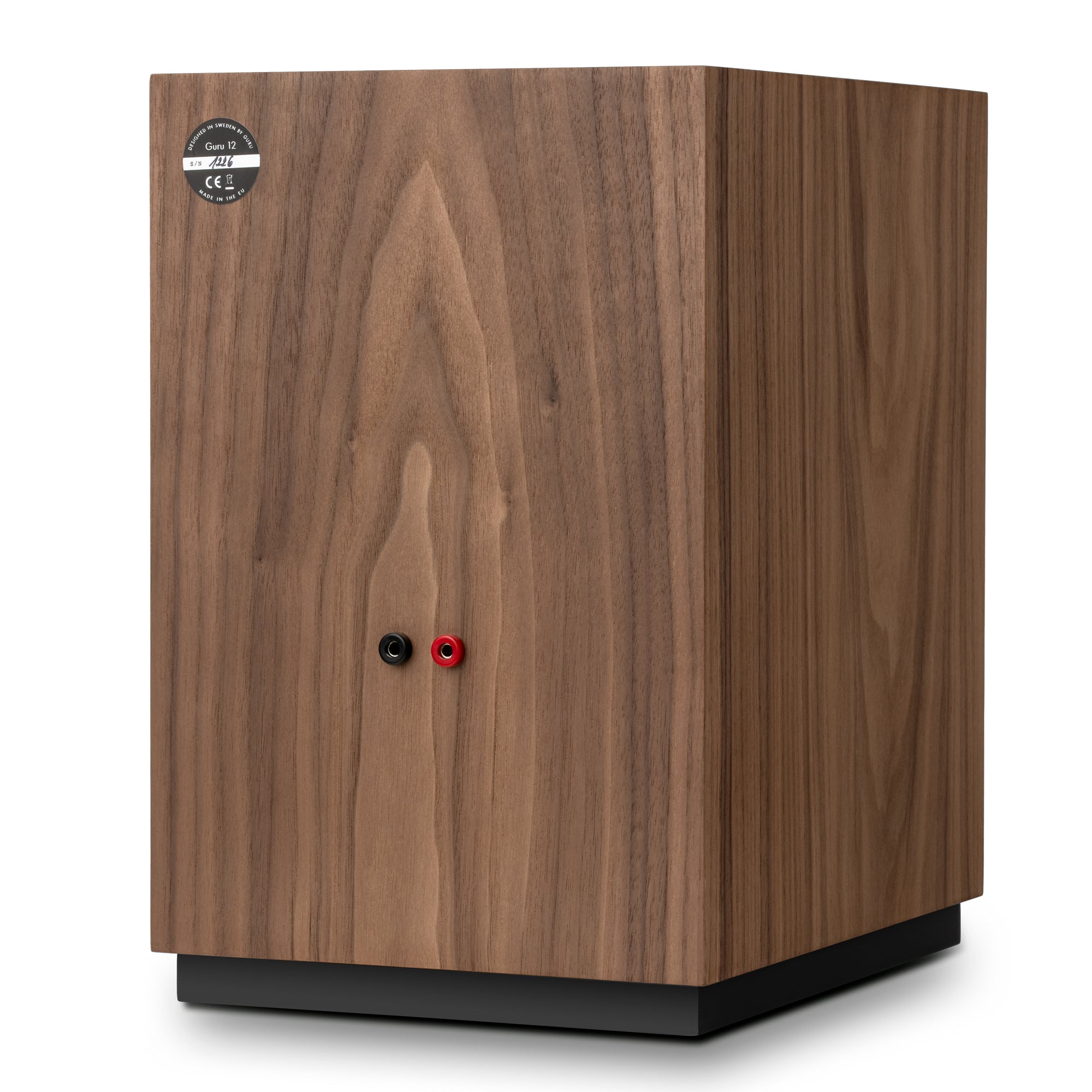
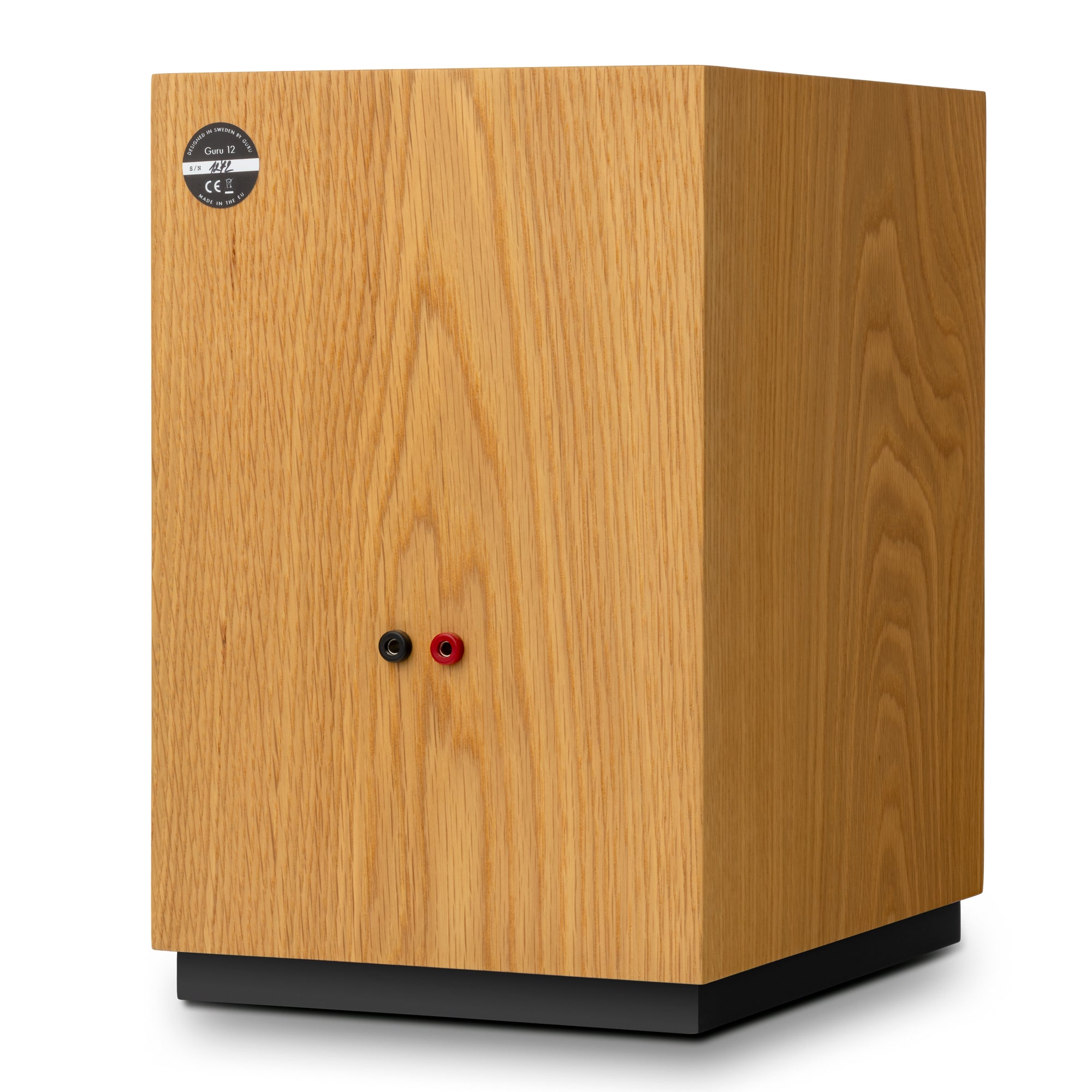
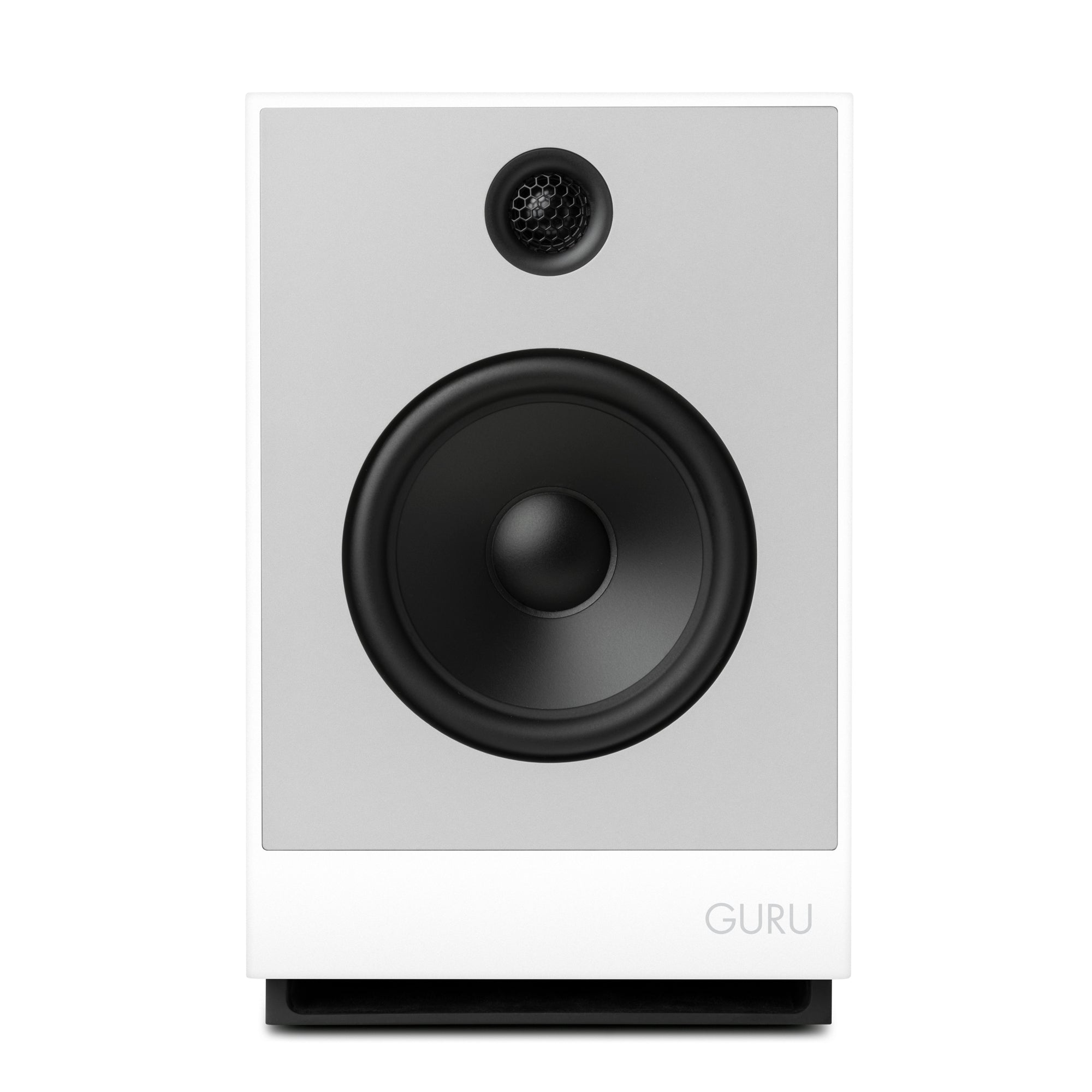

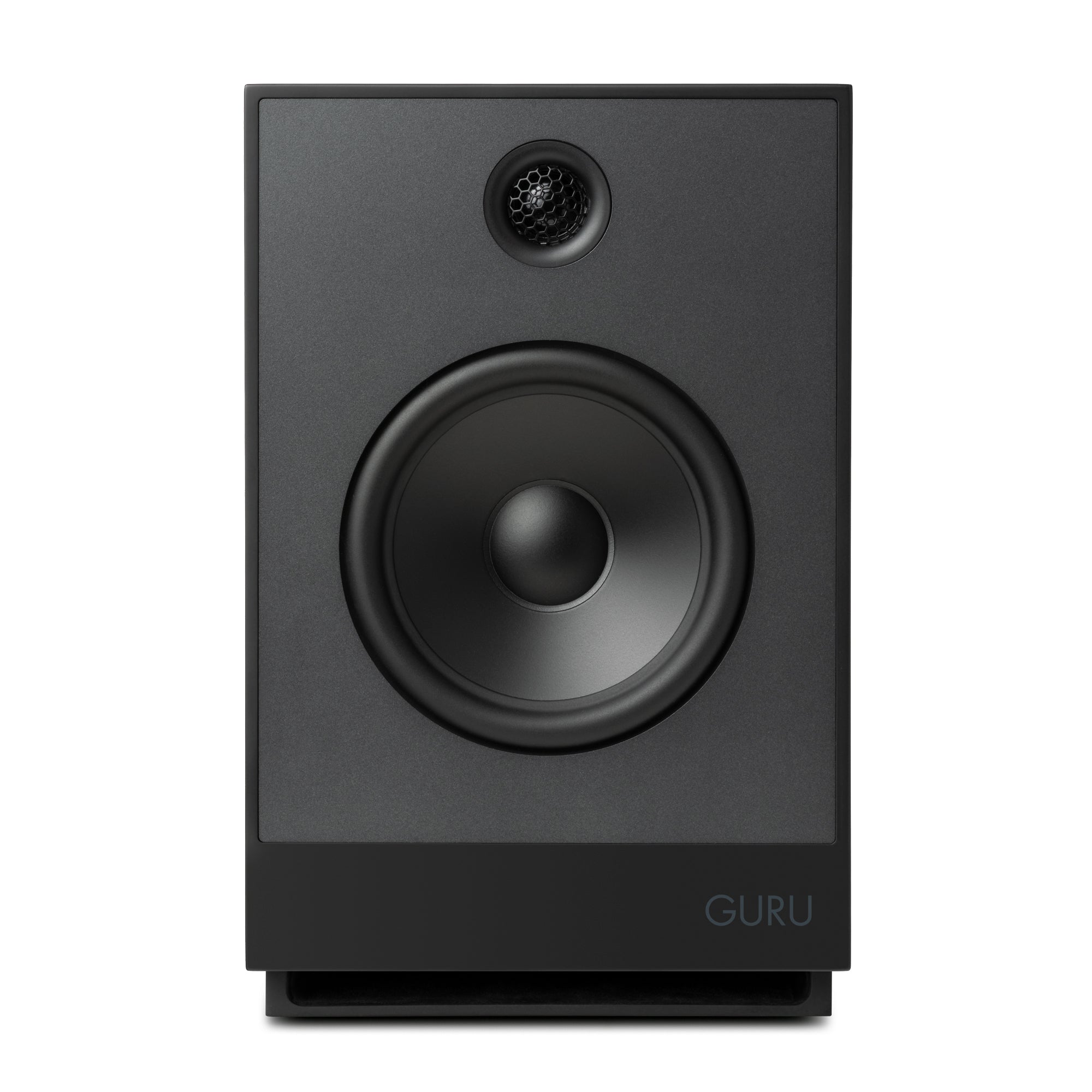
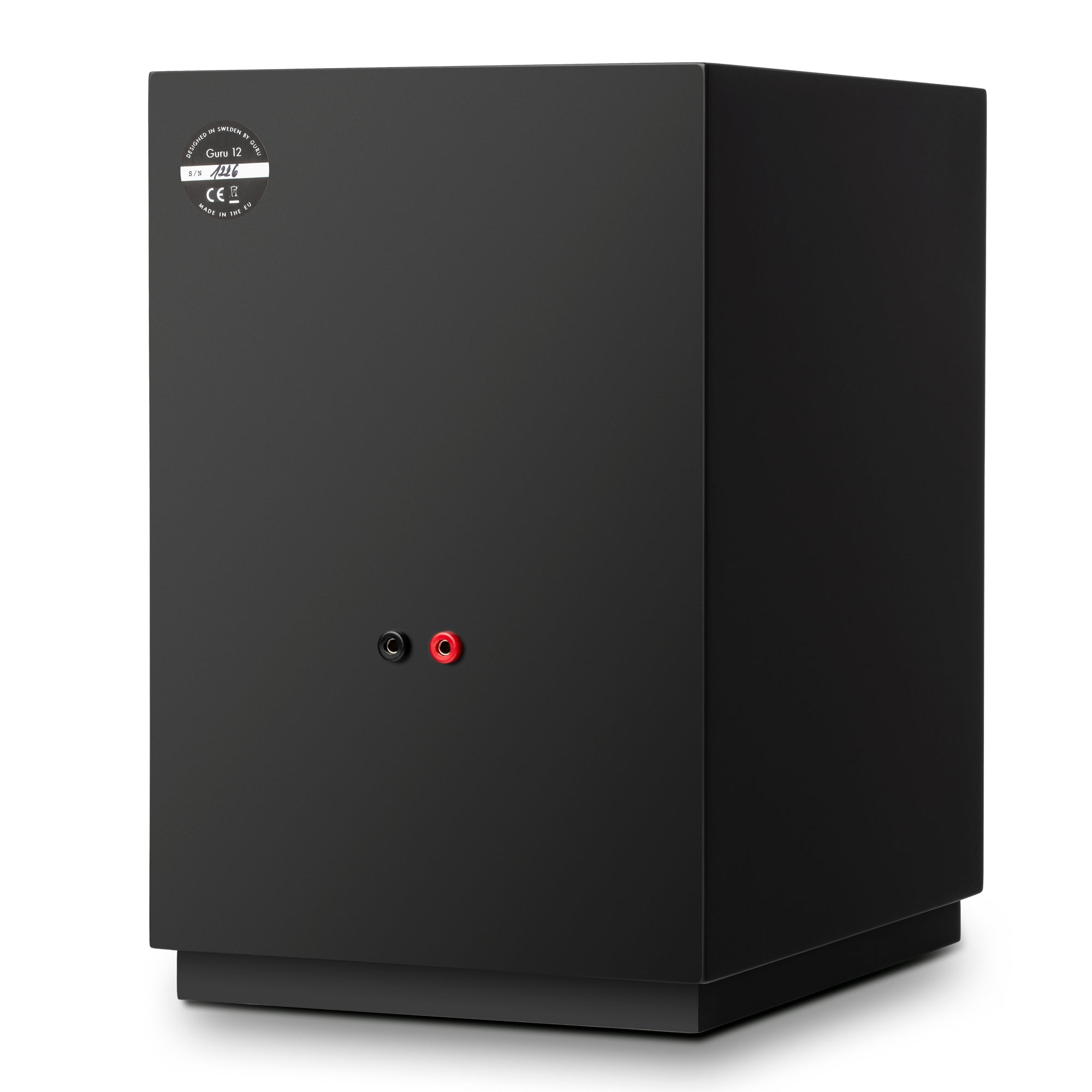
Guru 12 Stand-Mount Loudspeaker (Pair)
Pairs well with
Five-year warranty. Designed in Stockholm, hand-made in the EU.
Guru 12 Stand-Mount Loudspeaker (Pair)
The room-first idea
Most speakers are
measured in a chamber.
You don't live in one.
Guru was co-founded by psychoacoustics researcher Ingvar Öhman on a single inversion: design for the room people actually have. The rear wall stops being a problem and becomes part of the response — which is why Guru asks you to put the speakers almost against it, under 5 cm, and then set the triangle below.
Setup geometry per Guru's user guide · 1 × apart, 1.2 × back
Toe them in until you can just see the outer side edges from where you sit. Guru builds a sweet field rather than a sweet spot, so more than one seat works. This is a general guide and final placement is subjective. Move them around a little to find the best spot for you. You're the boss.
Three things doing the work
Move Air.
Not furniture.
Guru's own 125 mm mid/bass driver. More air moved than the Guru 8, which is where the extra scale and dynamics come from.
An unusually wide crossover band. The whole vocal range stays on one driver, with no handover cutting through the midrange.
An easy load at a 4-ohm minimum. Happy on anything from 10 to 160 watts, tube and hybrid amplifiers included.
Technical specifications
| Type | 2-way stand-mount loudspeaker |
| Enclosure | Helmholtz resonator, front-firing port, MDF/steel |
| Tweeter | Silk dome |
| Mid/woofer | Proprietary 6" (125 mm) driver |
| Typical in-room response | 30 Hz – 30 kHz |
| Crossover band | 2 – 7 kHz |
| Sensitivity | 88 dB (2.83 V / 1 m) |
| Nominal impedance | 5 ohms, 4 ohms minimum |
| Amplifier power | 10 W – 160 W |
| Dimensions (H × W × D) | 208 × 322 × 278 mm |
| Weight | 6 kg each |
| Finishes | Oak, Walnut, White, Satin Black, Fog |
| Warranty | 5 years |
| Origin | Stockholm, Sweden — hand-made in the EU |
What is the difference between the Guru 8 and Guru 12?
Does the Guru 12 need a subwoofer?
Can the Guru 12 go close to a wall?
Which amplifier should I pair with the Guru 12?
About the Guru 12 Stand-Mount Loudspeaker (Pair)
Availability: In stock.
The Stand-Mount That Thinks It's a Floorstander
If the Guru 8 bends the laws of physics, the Guru 12 files a formal appeal. Step-up model in Guru Audio's Swedish stand-mount range, the 12 pairs the brand's proprietary 6" (125 mm) mid/bass driver with a precision silk-dome tweeter to deliver clean, distortion-free sound from a floorstander-worthy 30 Hz to beyond 30 kHz — from a compact cabinet that sits happily on a shelf, centimetres from your wall. More cone area, more air, more everything. Same disappearing act. Priced in pairs.
Engineered for Real Rooms — Not Anechoic Chambers
Most speaker brands chase perfect measurements in laboratory conditions, then leave you to solve the hard part: your actual room. Guru inverts the equation. Co-founded by acoustic engineer and psychoacoustics researcher Ingvar Öhman, Guru designs every model to sound correct in-room — including near-wall placement within 5 cm of the boundary behind it, where most speakers turn to mud and Gurus come alive. The front-firing port, Helmholtz resonator cabinet, and unusually wide 2–7 kHz crossover band all serve one goal: speakers that acoustically vanish, leaving a deep, three-dimensional soundstage that holds together whether you're seated dead-centre or wandering the room with a glass of wine.
Where the Guru 12 pulls ahead of its smaller sibling: that 6" proprietary driver moves substantially more air, delivering greater dynamics, effortless scale in medium to larger rooms, and bass that reaches genuinely deep — all without a subwoofer, and without surrendering the compact footprint that makes Guru speakers so easy to live with.
Scandinavian Design, Down to the Last Detail
Guru is the product of an unusual trio: a professional violinist, an acoustics scientist, and an industrial designer trained at Stockholm's Konstfack University of Arts, Crafts and Design. The result is pure Nordic design language — clean geometry, honest materials, a contrasting baffle, and a shadow-gap plinth — in oak or walnut real-wood veneer, or painted white, satin black, and Fog grey. Reviewers have likened Guru's restrained aesthetic to Dieter Rams; we'd just say it's the rare hi-fi speaker your interior designer will thank you for. Pair it with the matching Standpoint solid-oak tripod stand for the full Stockholm effect.
Why You'll Love the Guru 12
- Floorstander-class bass — in-room response down to 30 Hz from a stand-mount cabinet
- Proprietary 6" mid/bass driver — Guru-designed 125 mm unit for scale and dynamics
- Silk-dome tweeter — clarity and precision extending above 30 kHz
- Wall-friendly by design — engineered for placement within 5 cm of the wall
- Sit-or-stand soundstage — controlled dispersion preserves imaging at any height
- Easy amplifier load — 88 dB sensitivity, happy with 10–160 W
- Designed in Stockholm, hand-made in the EU — Scandinavian build standards, designed to last
Frequently Asked Questions
What's the difference between the Guru 8 and Guru 12?
The Guru 12 uses a larger proprietary 6" (125 mm) mid/bass driver versus the 8's 104 mm unit, delivering deeper bass (30 Hz vs 34 Hz in-room), higher 88 dB sensitivity, greater dynamics, and more effortless sound in medium to larger rooms. Both share Guru's near-wall, room-first design philosophy.
Does the Guru 12 need a subwoofer?
For most music listening, no. With genuine in-room extension to 30 Hz, the Guru 12 covers the bottom octave of nearly all acoustic and electronic music on its own.
Can the Guru 12 be placed close to a wall?
Yes — that's the whole idea. Guru recommends placement within 5 cm of the wall behind the speaker, where its room-first engineering and front-firing port perform at their best.
What amplifier should I pair with the Guru 12?
Anything from 10 to 160 watts per channel. At 88 dB sensitivity with a benign 4-ohm minimum, it's an easy match for quality integrated amplifiers — including tube and hybrid designs. More power provides more flexibility in terms of room size and dynamics.
Footnote: the 10-watt Soulnote A-0 ver.2 is a perfect match.
Downloads
Download the Guru Stand-Mount Speaker User Guide (PDF) — setup, connection, placement, and specifications for the Guru 8, Guru 12, and Q10.

Made for it
GURU Standpoint 12 Speaker Stand | Solid Oak Tripod
$999.00