If you have any questions, you are always welcome to contact us. We'll get back to you as soon as possible, within 24 hours on weekdays.
-
Shipping Information
Use this text to answer questions in as much detail as possible for your customers.
-
Customer Support
Use this text to answer questions in as much detail as possible for your customers.
-
FAQ’s
Use this text to answer questions in as much detail as possible for your customers.
-
Contact Us
Use this text to answer questions in as much detail as possible for your customers.
The Reference Stage
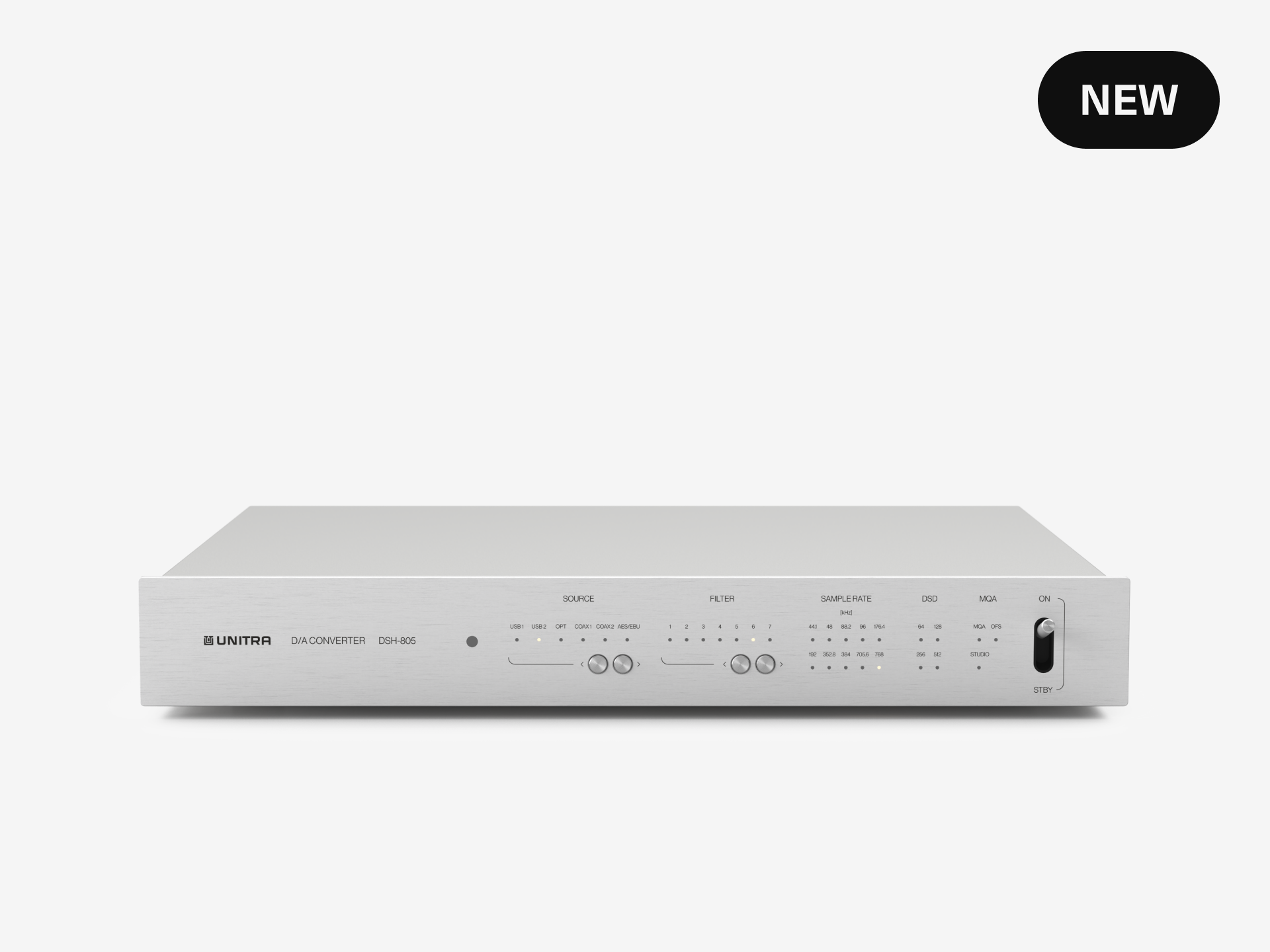
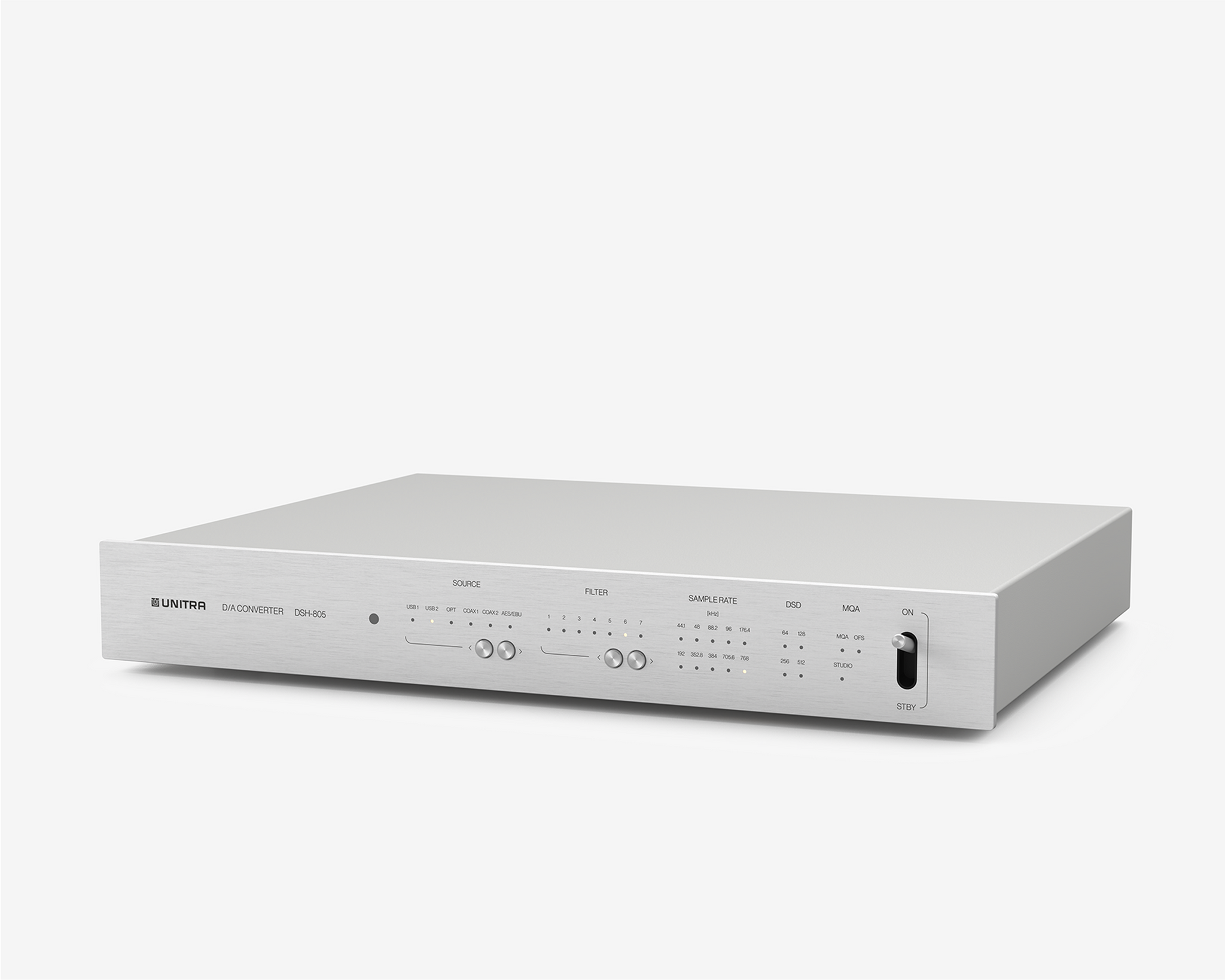
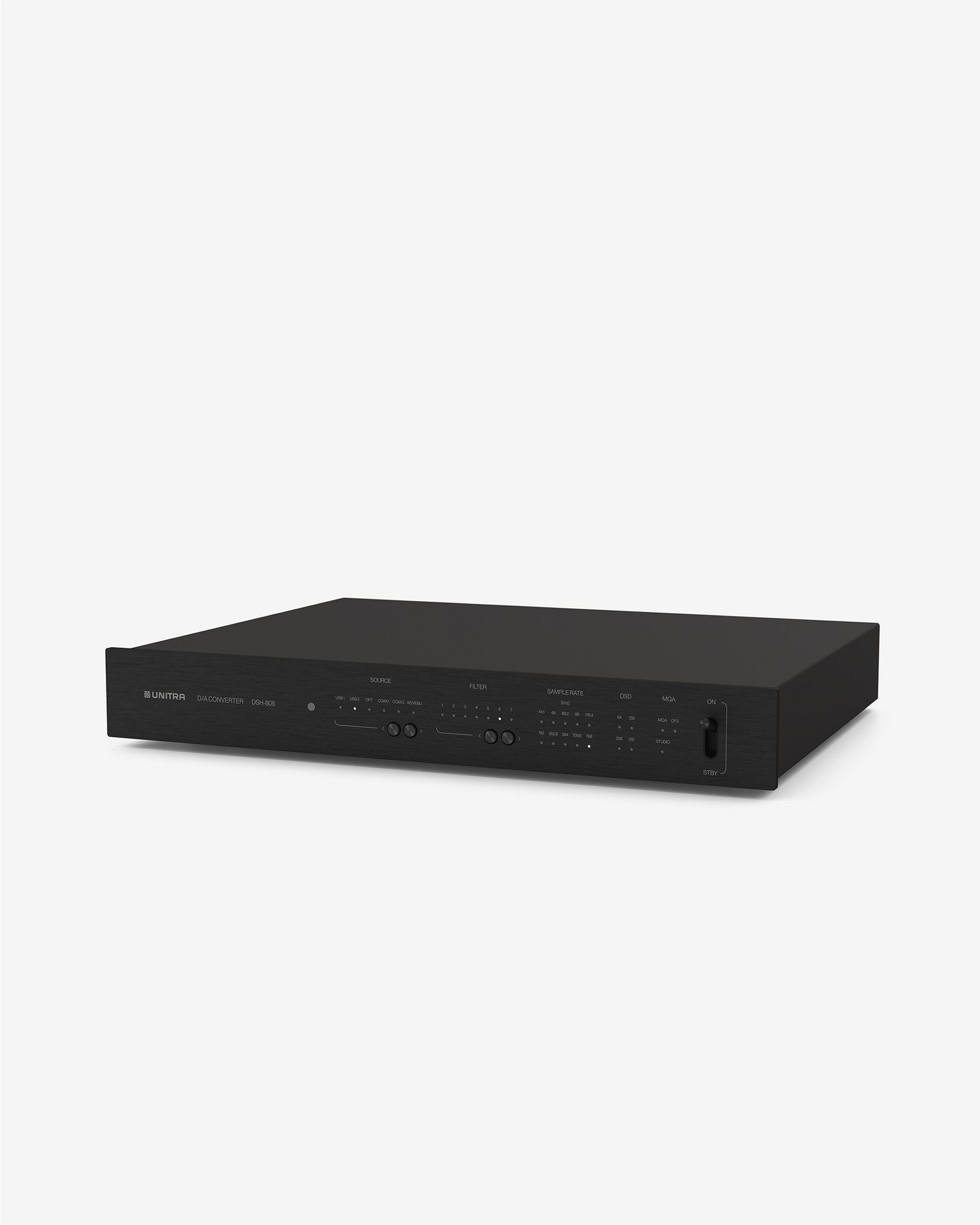
Unitra DSH-805 DAC
Eight converters, and a transformer to keep them honest.
Built around the ESS Sabre ES9039MSPRO — four converters per channel, feeding an 18-op-amp analogue stage through a custom-wound linear transformer.
Unitra DSH-805 DAC
Pairs well with
European engineering heritage since 1961 — designed and built to be heard, not simulated.
Unitra DSH-805 DAC
Inside the Case
Eight converters, seven filters, one transformer
Four ESS Sabre ES9039MSPRO converters per channel, eight in total
A custom-wound linear transformer, not a switching module
Under the Lid
Converters, filters, and the noise floor
Signal-to-noise ratio exceeding 125 dB, measured with the ESS Sabre ES9039MSPRO running its full eight-DAC, four-per-channel Hyperstream IV array.
Total harmonic distortion plus noise below 0.001% on the balanced XLR outputs, and below 0.00015% unbalanced.
Maximum PCM resolution over USB, with native DSD512 and full MQA decoding and rendering also supported.
Technical specifications
| DAC chipset | ESS Sabre ES9039MSPRO, 8 DACs total (4 per channel), Hyperstream IV |
| THD+N (balanced) | Less than 0.001% |
| THD+N (unbalanced) | Less than 0.00015% |
| Signal-to-noise ratio | Greater than 125 dB |
| Channel separation | Greater than 115 dB |
| PCM support | Up to 768 kHz / 32-bit via USB; 192 kHz / 24-bit via coaxial, optical, AES/EBU |
| DSD support | Native DSD512 via USB; DoP up to DSD256 (all digital inputs support DoP DSD64) |
| MQA | Full MQA decoder and renderer, standard and Studio formats |
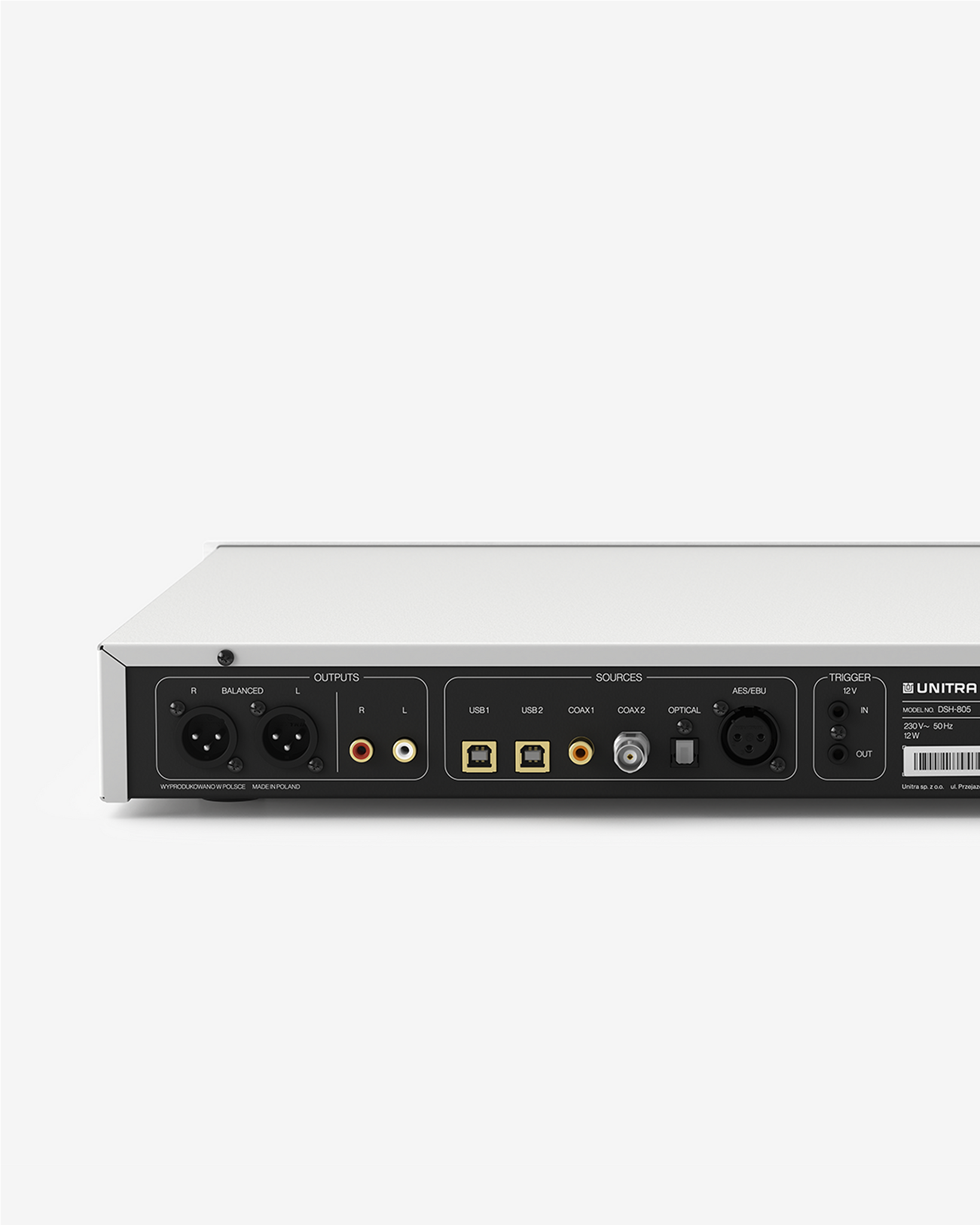
| Inputs / outputs | 2× USB (galvanic isolation), 2× coaxial, 1× optical, 1× AES/EBU; gold-plated RCA and XLR outputs |
What DAC chip does the DSH-805 use?
The ESS Sabre ES9039MSPRO, ESS Technology's flagship converter chip, configured with eight DAC units total — four per channel — running ESS's Hyperstream IV architecture.
Does the DSH-805 support DSD and MQA?
Yes. It decodes native DSD512 over USB, DoP up to DSD256 over USB, and DoP DSD64 across all digital inputs. It also includes a full MQA decoder and renderer, handling both standard and Studio MQA files.
What's the difference between the balanced and unbalanced outputs?
Both are gold-plated — RCA for unbalanced, XLR for balanced. Distortion figures differ slightly: THD+N is under 0.001% on the balanced output and under 0.00015% on the unbalanced output.
What inputs does it accept?
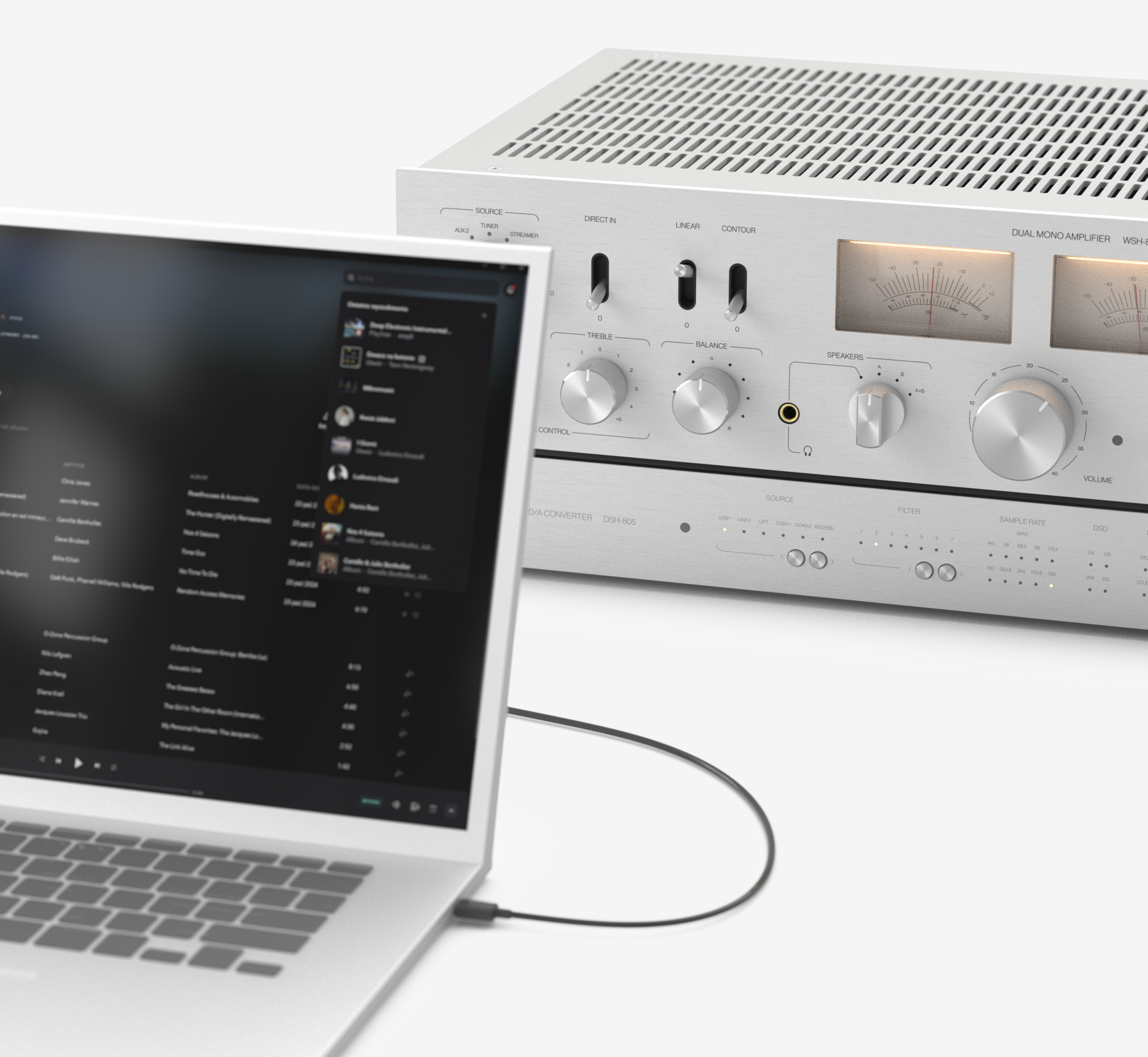
Two USB inputs with galvanic isolation, two coaxial inputs, one optical input, and one AES/EBU input. USB carries the highest resolution, up to 768kHz/32-bit PCM and native DSD512.
Can I choose the digital filter?
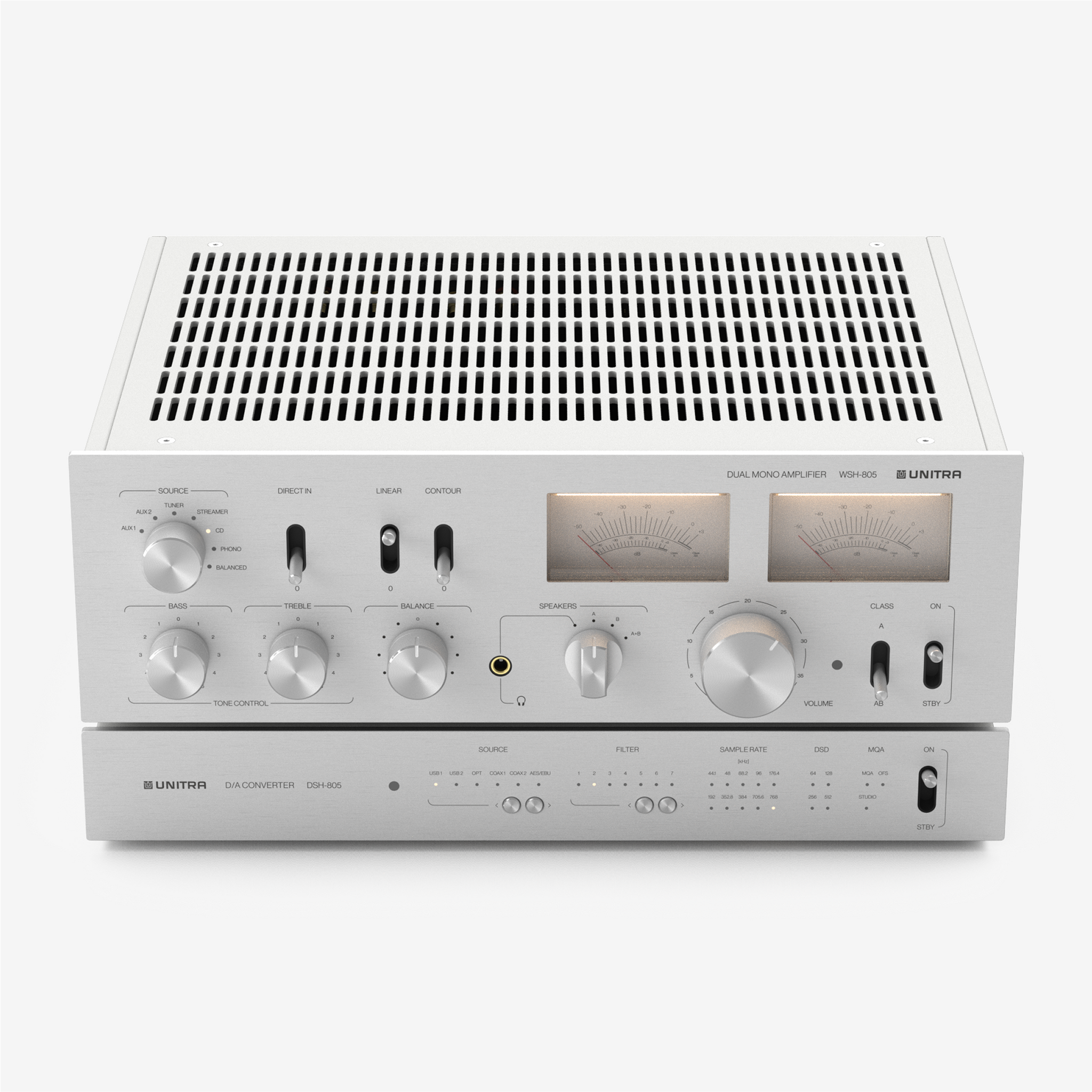
Yes, the DSH-805 offers seven selectable PCM digital filters, with the active filter, sample rate, input, and format shown on the front LED matrix display.
What power supply does it use?
A linear power supply built around a custom-wound transformer designed in Poland. No switch-mode supply anywhere near the analogue stage, which is the point of it.
About the Unitra DSH-805 DAC
Truth in Sound — The Reference DSH-805 DAC
The Unitra Audio DSH-805 DAC is a reference-class digital-to-analog converter engineered for listeners who demand nothing less than the truth. At its core sits the latest ESS SABRE® architecture, renowned for its ultra-low noise floor and extraordinary detail retrieval, wrapped in Unitra's own proprietary refinements. From the subtlest microdynamic to the sharpest transient, the DSH-805 renders every detail with natural clarity and effortless musicality: a soundstage that feels alive, bass with authority, and highs that shimmer without a trace of harshness.
An Internal Master Clock That Tames Jitter
Every digital input is re-clocked by the DSH-805's internal master clock, which dynamically selects the optimal frequency for each transmission. This minimizes jitter and holds timing accuracy constant regardless of the source, so the digital path always operates under perfectly controlled conditions. The payoff is natural dynamics and pristine sonic clarity that don't waver from track to track or source to source.
Galvanic Isolation and a Linear Power Supply
Both USB inputs feature galvanic isolation, blocking the electrical interference that computers and phones inject into an audio system — making USB the recommended, highest-quality way to feed the DAC. Underpinning it all is a linear power supply built around a transformer designed and wound in-house, the stable foundation on which the DSH-805's clean, dynamic sound is built. A front-panel LED matrix keeps you informed, displaying the active source, selected filter, sampling rate, format, and MQA or DSD status.
Why You'll Love the DSH-805
- Latest ESS SABRE® conversion architecture with Unitra's proprietary refinements
- Internal master clock re-clocks all inputs to minimize jitter
- Galvanically isolated dual USB inputs for interference-free digital audio
- In-house linear power supply for a stable, quiet foundation
- Informative front-panel LED matrix (source, filter, sample rate, format, MQA/DSD)
Frequently Asked Questions
Which DAC chip does the DSH-805 use?
It's built on the latest ESS SABRE® architecture, enhanced with Unitra's own proprietary circuit solutions for performance beyond a conventional implementation.
Why are the USB inputs galvanically isolated?
Isolation blocks electrical noise from computers and mobile devices before it can reach the audio path, which is why USB is the recommended connection for the cleanest, most stable signal.
Does it show format and sample-rate information?
Yes. A front-panel LED matrix displays the active source, selected digital filter, sampling rate, format, and MQA/DSD status.