
Listening Room Confidential, No. 4 — an occasional series.
Two rebels walk into a hotel room. One is Soulnote, a Japanese electronics maker that has thrown out negative feedback. The other is Guru, a Swedish loudspeaker maker that wants its speakers pushed up against the wall. Between them, that's two of the hobby's commandments broken before lunch.
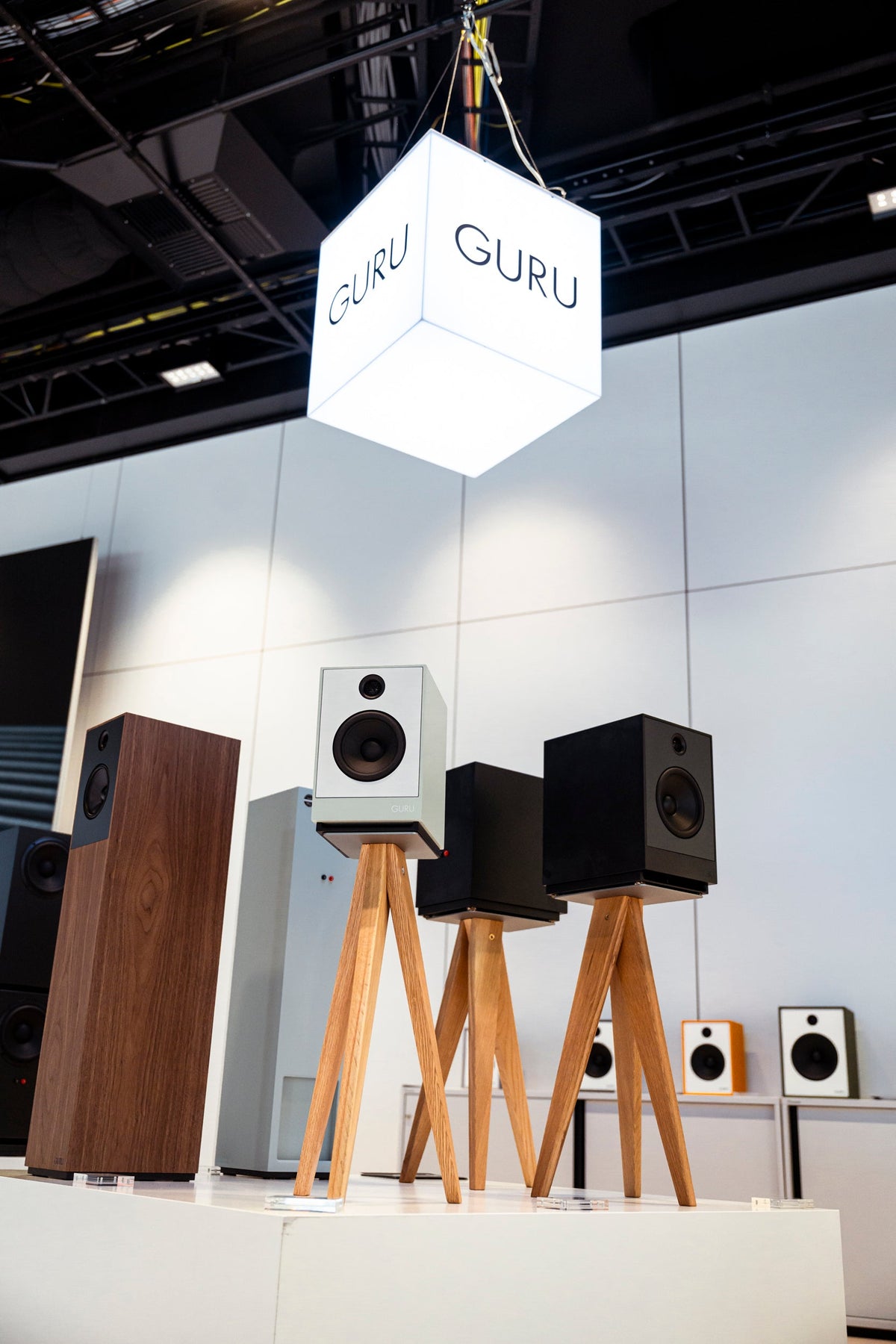
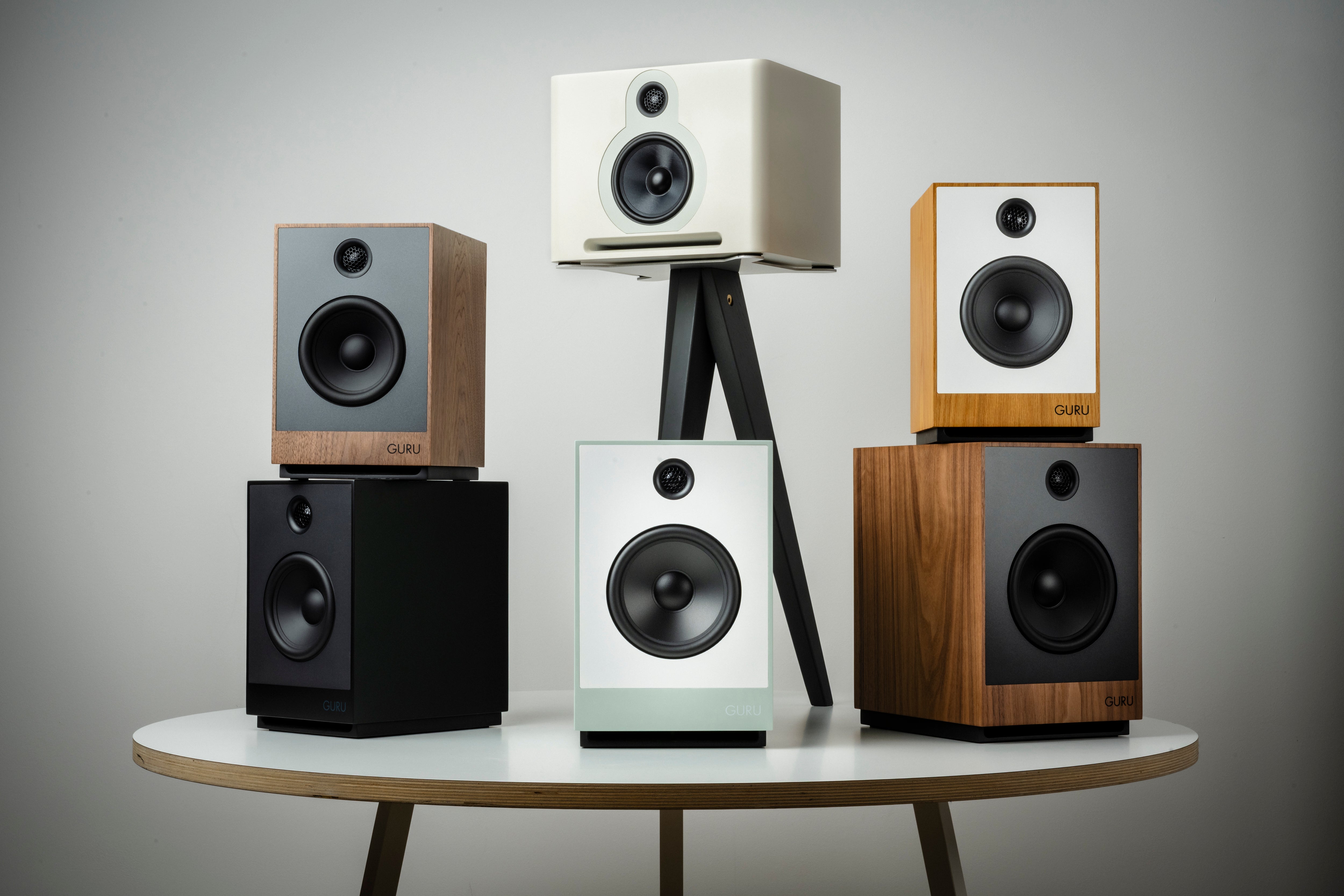
At the Toronto Audiofest, October 16–18, the Soulnote A2v2, D2v2 and X-3 will be driving Guru loudspeakers: more modestly priced designs engineered to live near a wall, in rooms with furniture and people in them. Yes, the electronics may cost more than the speakers. We did the arithmetic. We did it on purpose.
I'll explain the thinking, then get out of the way and let the music do the bragging, which is the proper order of things. No sides to pick, no sermons. Just a reason to sit down and listen.
The measuring cup principle
Every kitchen has two kinds of cook: the one who measures everything and the one who swears by feel. Every kitchen also has one night when they argue over a perfectly good cake while it goes flat. Hi-fi has been having this argument for decades, and we're bringing the cake (figuratively, of course).
A word on all the cooking. Taste and hearing are both human senses, and in both the last word belongs to a person, not an instrument. A scale can tell you a cake contains exactly 200 grams of flour, but not whether anyone will ask for a second slice. A test bench can tell you an amplifier's distortion to three decimal places, but not whether the music makes the hair on your arm stand up. So yes, there will be food references, and they are entirely on purpose. Bring on the food references.
As a broke student, Hideki Kato built amplifiers and speakers by ear alone, with no test equipment, and was thrilled with them. One of them, in his opinion, beat a friend's expensive amplifier. Then he got hold of a measuring device. The numbers were grim, so he did what any conscientious engineer would do and fixed them. The specs improved. The music went flat. Call it the measuring cup principle: follow every measurement to the letter and you can still end up with a flat cake. Kato reaches for the kitchen himself: weigh every ingredient to a ten-thousandth of a gram, he says, and a world-famous chef's dish will still taste different from his.
Every cook knows that moment: the dish tastes right, the recipe says it shouldn't, and you have to decide who to trust. Kato says the puzzle took him four decades to work through, by way of NEC's audio department and Nippon Marantz, where, happily, he got to work on non-feedback power amplifiers, before he landed at Soulnote as chief engineer in 2016. His conclusions are written up in his own words, translated from Japanese, and worth an evening.
Feedback, in one paragraph
Negative feedback is the amplifier tasting its own cooking and adjusting the seasoning, constantly, while the dish is still on its way to your table. Most amplifiers do it, and it makes the numbers gorgeous. Kato's quibble is that a cook who never stops fiddling can serve you something technically flawless and utterly forgettable. So Soulnote skips it and tunes by listening instead of by meter. He's fond of a sushi analogy: two plates, same fish, same rice, one made by a master and one by an amateur. The lab report says identical. Your mouth disagrees.
To his credit, Kato is candid that this is a hypothesis rather than a proven theory. He's a designer, he says, not a researcher, and Soulnote is his real-world experiment. I find that more persuasive than certainty would be.
Other schools of thought
Not everyone shares Kato's view, and that's healthy. Plenty of respected designers use feedback beautifully, and Luxman, another famous Japanese house, has its own clever middle path that feeds back only the distortion. Even Luxman is candid about the goal: it describes its newer LIFES circuit as delivering a natural sound quality “almost if it were a non-feedback equipped circuit.” Different roads to the same destination. We're not here to convert anyone. We're here to let you taste.
Three boxes, one idea
Sometime around noon on the Friday of the show, a man in a very good jacket will put two fingers on the lid of the A2v2, feel it move, and look at me the way you'd look at a car salesman whose door just came off in your hand. He needn't worry: the top plate is designed to rest lightly on its spikes, because Kato found his amplifiers sounded best with the lid off. It's deliberate, and the amplifier is designed that way.
Underneath, it's an integrated amplifier that Soulnote describes, with admirable honesty, as “essentially a power amplifier equipped only with a selector and volume control.” It's hand-built in Japan, weighs about 20 kilos (you'll feel that on the stairs, and again the next morning), and delivers 80 watts per channel into 8 ohms, rising to 160 into 4. It can also be used as a power amp, or paired up for bi-amping later, so it grows with your system.
The D2v2 is the DAC. Most DACs tidy up digital audio with a filter, a bit like retouching a portrait until the wrinkles and the personality are both gone. The D2v2 offers an alternative called NOS (non-oversampling) that leaves the filter out, plus a button to switch back whenever you like. Four converter chips, two per channel, do the heavy lifting; the rest of the design is about staying out of their way.
The X-3 is a clock. That's all it is. It's the only component I know whose entire personality is punctuality. It keeps perfect time for the DAC, and it does so with a power supply you'd expect to find in a 100-watt amplifier. When Soulnote decides something matters, it doesn't do things by halves.
The rebel from Stockholm
The second rebel is Guru, founded in Stockholm in 2007 by an engineer, a violinist and an industrial designer, which sounds like the setup to a joke and is in fact a business plan. The engineer, Ingvar Öhman, is a former hearing researcher who couldn't find a loudspeaker accurate enough for his experiments, so he built one. The violinist, Erik Ring, keeps a musician's ear on how real instruments sound, and the designer, Erik Espmark, makes sure the result looks like it belongs in a living room.
And its philosophy rhymes with Kato's. Guru tells you to push the speakers up against the wall, the one thing setup guides have forbidden for as long as I've been in this business. Its manual asks, ideally, for less than five centimetres, barely enough room to lose a remote.
The rhymes keep coming. Both started with a designer who thought the usual yardsticks were missing something; Guru's own technology page notes that a home is nothing like an echo-free chamber and “ears are not measurement microphones.” Both put timing first. Both design for the room the music will actually be played in, which is how a compact cabinet ends up with bass it has no business having. And both look a little odd on the test bench, since a speaker built to sit against a wall seems strange measured out in the open, just as a no-feedback amplifier looks strange on a distortion chart.
Does that make them right? Nobody is claiming it's proven, least of all Kato, who calls his approach a hypothesis, and Guru's case rests more on its designs than on published studies. The mainstream view, built on decades of careful listening tests, has earned its reputation. But notice the question the rebels are really asking: not whether the measurements are wrong, but what is left once they're perfect. Two teams on opposite sides of the world keep circling the same ground: timing, real-world listening and the ear as final judge. That isn't proof. It's the sort of coincidence that makes a person sit up straight in a hotel chair.
The VHS test
Which is why we don't call this a mismatch. Nobody shows off a flagship television with a VHS machine, and a speaker can only reproduce what it's handed. Judging a modest speaker through modest electronics is a bit like reviewing a concert from the parking lot.
Think of it as a magnifying glass rather than a shopping list. Very few people need to spend this way, and we're not suggesting you do. The lesson travels down the price ladder. In Has Hi-Fi Lost the Plot?, the first piece in this series, I argued that the first few thousand dollars buy the biggest improvements, and every rung after costs more than the last. That steep early stretch is where most of us live, so come and find the ceiling, then go home and decide where your own money belongs.
Your table is waiting
Here is the entire protocol: walk in, find a seat and let the music do the talking. There's nothing to adjust, nothing to ask for and no dress code. Kato's philosophy runs to twelve parts, and there will be no test. No reservation required.
The A2v2, the D2v2 and the X-3 will be driving the Guru speakers, so the whole kitchen is in the room. Stay for a song or two, then ask yourself the one question a spec sheet can't answer: do I want to hear the next one? If the answer is yes, you've just judged the cake by tasting it, which is the whole Soulnote philosophy in one sitting. If it's no, that's a perfectly good way to shop.
We'll be at the Toronto Audiofest, October 16–18, 2026, in Rooms 235 & 237. Come and say hello. Touch the lid if you must. Everybody does. I'll explain.
Follow the series: every instalment is collected under Listening Room Confidential, and the rest of the Notebook lives here.
Previously: How to Listen, Elbows Up, Ears Open and Has Hi-Fi Lost the Plot?.
FAQ in brief
What does “non-NFB” mean?
Non-NFB means no negative feedback: the amplifier doesn't send part of its output back to its input to correct errors. Soulnote leaves it out because its designers believe it costs music some of its life and immediacy, and they tune by listening instead.
Why would a designer leave out negative feedback?
Soulnote's chief designer, Hideki Kato, argues that feedback improves measurements but can take the spark out of the music. Other respected designers take different routes, and Luxman, for instance, feeds back only the distortion. The best way to decide is to listen.
What is NOS mode on a DAC?
NOS stands for non-oversampling. The DAC plays the music as recorded, without the digital filter most DACs apply. On the Soulnote D2v2 it's switchable, so you can compare the two sounds yourself.
Do I need a master clock like the X-3?
No. The D2v2 has an excellent clock of its own. The X-3 is for people who want to hear what an even steadier timekeeper adds, and it will be part of the system at the show.
Will the A2v2 drive my speakers?
It's rated at 80 watts into 8 ohms and 160 watts into 4 ohms, with a power supply designed for difficult loudspeakers. The best test is to hear it with your speakers.
Are Soulnote electronics overkill for Guru speakers?
In some combinations, perhaps, and no one should feel they have to buy top of the line to get great performance. The A2v2, D2v2 and X-3 are a natural match for the Guru 20, 28 and 42 and the upcoming Apex series, while the more modestly priced Guru 8, 12 and Q10 and the upcoming Elements series sit more comfortably with Soulnote's more affordable A0v2, A1v2 and D1v2. As a demonstration, though, the pairing is the point: both are designed by ear, with timing and real-world listening in mind, and putting a non-feedback amplifier, a reference DAC and a master clock behind a Guru shows what a good loudspeaker can do when the electronics aren't holding it back. It's the audio equivalent of showing a television with a proper source instead of a VHS machine.
Where can I hear Soulnote in Canada?
At the Toronto Audiofest, October 16–18, 2026. To find an authorized Audionation dealer near you, contact Audionation. Soulnote is made in Japan and imported directly to Canada duty-free under the CPTPP.
About the author
I've been in and around the audio business for more than forty years. My business card says Founder, which is what you call the person who was in the room before anyone thought to give out titles — hell, before anyone else was in the room at all. Music plays all day, every day, and four decades in, the job is still sitting down and listening to records, or streaming if I don't want to get up. Tell me, what's better than that?
Jeff, Audionation
Founder

How to Listen