
Listening Room Confidential, No. 2 — an occasional series.
I had a different piece written. It was about the Danes, who announced in July that they're packing up the American office and leaving North America by the end of September, and it was about what it feels like to be the country that gets mentioned second in other people's press releases. Decent piece. It's in a drawer. It'll keep, the way things keep in drawers.
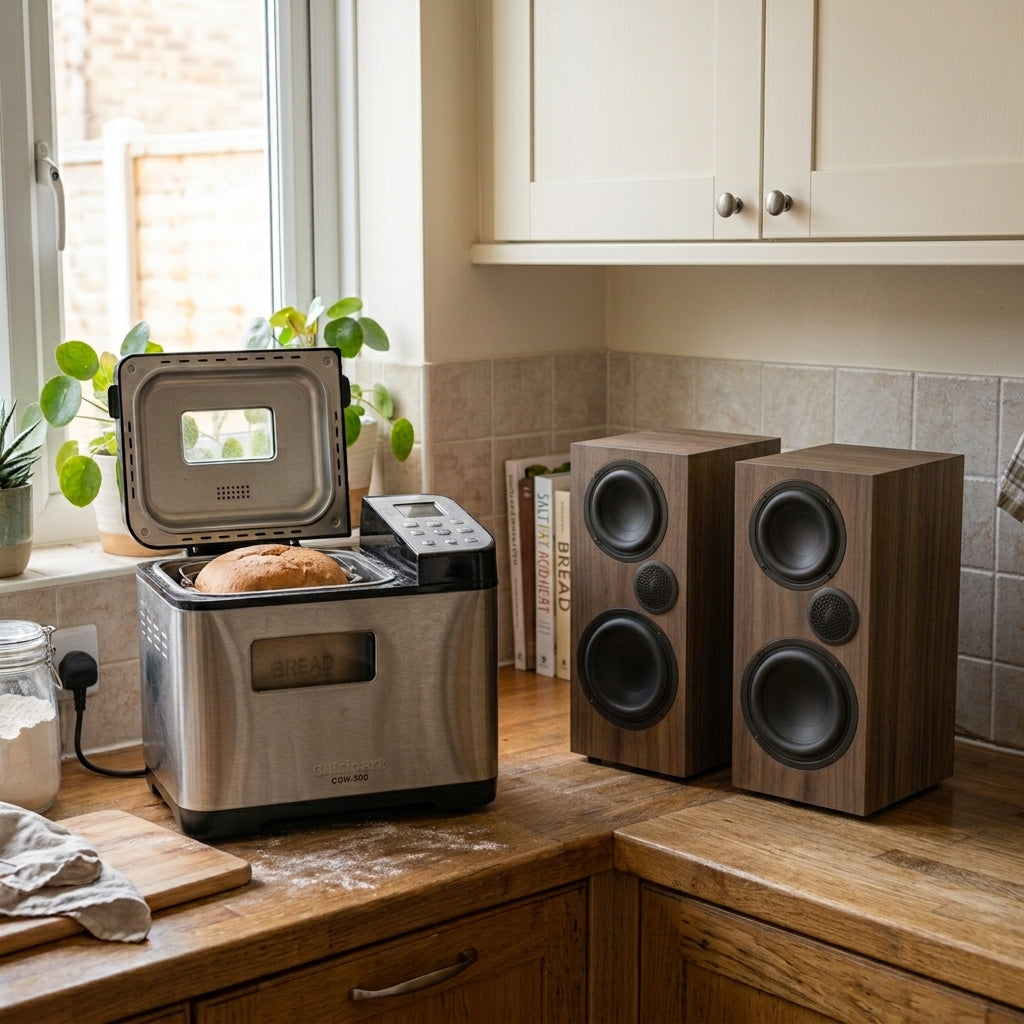
Because this morning the Finance Minister stood up and said "dollar for dollar, rate for rate," and the Prime Minister used the word attacked, and somewhere between the lipstick and the smartphones and the bread makers on the list, it occurred to me that the most consequential thing happening to Canadian hi-fi this year isn't happening in a listening room. It's happening in a customs schedule. A PDF. Nobody reads it. I read it, because that's what my years in distribution have done to me: you can't pass a document with a tariff column in it without checking the lines, the way an old mechanic can't hear an engine idle without tilting his head.
I'll try to keep the politics out. I'll fail, a little. But I'm not here to tell you how to vote. I'm here to tell you what's about to happen to the price of an amplifier, because that's the job, and because everyone else in this business appears to have decided that if they don't say it, it won't be true.
The sequence, without the adjectives
The talks have failed. On the nineteenth of August the Americans put a fifty percent tariff on a long list of Canadian goods — dairy, booze and cars were the headlines; "electronics" is in the fine print — and for the first time they did it without the CUSMA exemption. Compliant, not compliant, didn't matter. Thirty years of free-trade agreement, the thing every supply chain on this continent was built on top of, set aside with a citation to a law from 1930. Nineteen-thirty. They went to the attic for that one.
This morning Canada answered. Twenty-seven billion dollars of American imports. Fifteen, twenty-five and fifty percent, effective the eighth of September, each product matched to whatever the Americans hung on ours. Steel, appliances, farm equipment, pulp and paper, and — there's that word again — electronics. Smartphones at fifty. Routers at fifty. Bread makers, God help us, at twenty-five.
So I read Chapter 85, which is where the government files everything with a plug on it. Every line. And here is what I found: loudspeakers, amplifiers, headphones, turntables, CD players, streamers — not on it. Not at fifty, not at twenty-five, not at any rate at all. The Department of Finance went through the entire Canadian economy looking for things we buy from Americans in enough volume to hurt them, and a bread maker made the list and a pair of loudspeakers didn't.
I have never, in four decades, felt so precisely measured.
Sit with what that means. It isn't that they spared us. Nobody spares you in a trade war; sparing implies you were considered. It's that the whole business — every shop, every distributor, every one of us — rounds to zero on a spreadsheet in Ottawa. We like to think of ourselves as an industry. We have magazines, awards, a show circuit, men who will argue about capacitors until the bar closes. And the one time the federal government sat down to count what actually moves across the border, we didn't register. Somewhere a civil servant weighed us against a bread maker and the bread maker won.
Two footnotes for the parts drawer, and then I'll stop. Replacement parts for radio receivers are caught, at twenty-five percent, even though the receivers themselves aren't, which is exactly the kind of thing a schedule does when it's written by people who have never had to fix one. And there's a line for insulated wire that may or may not reach into cables, depending on your broker and how his morning went. Finished goods — the things you'd actually carry out of a shop — are clear. As far as we can tell.
Meanwhile, and this is the part that was always true and nobody ever cared: a loudspeaker from Sweden, an amplifier from England, a DAC from Japan, all come into Canada at zero. Not low. Zero. CETA with the Europeans, the continuity deal we signed with the British after they left the Europeans, and the CPTPP with Japan. Quietly, for years, this country signed free-trade agreements with half the planet, on the theory that you shouldn't keep all your trade in one neighbour's basket, and everyone politely agreed it was a nice idea and went on keeping it in the one basket anyway. It looked, at the time, like paperwork. This week it looks like foresight, which is what paperwork is called after it turns out to matter. Of the lot, exactly one partner has torn his up. You can guess which.
So where's the damage, then?
Fair question. If the Canadian border isn't charging American hi-fi a cent, why am I writing this? Because the damage isn't done at our border. It's done in their factory, and it's done before the box is sealed.
Open up an American amplifier — a good one, built by people who care — and look at what's in it. Transformers, capacitors, chips, the chassis extrusions, the little display, the remote control. They came from China, Taiwan, Malaysia, Vietnam, sometimes Germany, occasionally Denmark. Every one of those countries is now on the wrong end of an American tariff, and the factory pays it on the way in. Then it pays extra for the memory in its streamer, because the artificial-intelligence people have bought all the memory in the world to run machines that summarize articles like this one for people who won't read them. Then it pays a worker whose rent went up for all the reasons above. By the time that amplifier has a price tag, there's a war baked into the price, and it doesn't matter that Canada waved the box through with a smile. We waved through something that got twenty percent dearer before it ever saw a border.
The English factory pays some of that, not all of it. Freight is up for everyone; nobody on earth is shipping a container for what it cost two years ago, and the memory shortage doesn't check passports. But Britain, for all its problems this year, is not at war with its own supply chain. Its capacitors arrive from wherever capacitors arrive from, at roughly what they cost last year, with no tariff bolted on at the dock. Its price in Canadian dollars moves with the pound, which is a devil, but a devil we've known for thirty years and can price around in our sleep. The English amplifier got dearer this year. The American one got dearer and then got taxed on top.
And then there's the part that never shows up on any schedule. The Americans didn't amend CUSMA. They set it aside. On a Tuesday, more or less, with a legal citation older than my father. Every distributor in this country who has spent a career assuming the southern border was a formality now has to plan as though it isn't, and you cannot plan on rules that change with the weather. You plan on the ones that have held. CETA has held. The Japanese deal has held. Nobody in Brussels or Tokyo has yet threatened to tear one up by executive order, and — with respect to both cities — I don't think they have the flair for it.
And here's one more, and it's the one that makes me grind my teeth, because it's a Canadian problem with a Canadian solution and nobody's applying it. A great deal of the European and Asian hi-fi sold in this country doesn't come here. It goes to a warehouse in New Jersey or Illinois first, because the brand's North American operation is American and Canada is a line on its spreadsheet. That container clears US customs and pays the American tariff on its way in — the full rate, on a Danish or Japanese or Italian product — and then a pallet is broken off and trucked north, and the tariff comes with it. Baked into the transfer price. Invisible on the Canadian invoice. By the time that speaker reaches a shop in Calgary, a Canadian customer has paid an American tariff on a product that never needed to be in America and would have entered Canada at zero if it had come straight from the factory.
That's not the Americans doing it to us. That's us letting it be done to us, by buying from brands that treat this country as a suburb of Chicago, when we have a free-trade agreement with the factory's own country sitting unused in a drawer. The brands whose North American offices are American have no particular reason to fix it; Canada is a rounding error on their continent and the tariff is somebody else's problem by the time it reaches Winnipeg. The Canadian dealer never sees the line item. And so the price sits there, quietly inflated, and everyone assumes that's what the thing costs.
The fix isn't to lobby New Jersey. The fix is to ask a different question when you're choosing what to carry, or what to buy: who brought this into the country, and from where? A brand that ships from its factory to a Canadian importer, under a Canadian trade agreement, arrives with no American tariff in it, because it was never in America. A brand that comes in through a US subsidiary arrives with one, whether or not anyone mentions it. That's the whole test. It takes one question at the counter, and a good dealer will know the answer without looking it up.
Now put two amplifiers side by side in a shop window. Same wattage, same reviews, same weight of aluminium. One came from a factory paying a tariff on every component in the box, from a country that just made the border a coin toss. The other came from a factory that isn't, from a country that hasn't. Which do you stock? Which do you buy?
I'll be careful here, because I know how this reads. I'm not saying American hi-fi is bad. Some of the finest gear I've ever heard was built in the United States by people who would sooner die than ship a bad unit. I'm saying that, through no fault of theirs and no genius of anyone else's, the economics of selling it here went sideways this year, and the economics of selling European and Japanese gear here picked up a tailwind that nobody in Europe or Japan lifted a finger to earn. Luck, mostly. But you take luck. In this trade you take whatever the tide brings in and you don't ask it how the crossing was.
The email
Which brings me to the email.
It arrived this week from a hi-fi retailer — not one of ours, and I'll keep the name to myself — warning customers that "starting September 8, tariffs are expected to affect several of the premium brands we carry," followed by a list of seven well-known American names: amplifiers, subwoofers, loudspeakers, headphones, a DAC, a cable, a media server. The good news, the email continued, was that anything in stock this week was tariff-free, and if you placed a factory order right now they'd air-freight it in before the deadline at no charge. Now is the time to lock in your order.
I read it with the schedule open in the other window, which I recommend as a way of reading anything a salesman sends you. Amplifiers, subwoofers, loudspeakers and headphones all live in heading 8518. Heading 8518 is not on the list. Neither is the DAC. Unless that shop knows something the Department of Finance doesn't, the tariff they're urging you to outrun does not exist for most of what they've named. The cable might be caught — cable is the one line in doubt — so I'll give them that. The media server is a computer, and that's a different chapter, and I haven't read it, and I'm not going to pretend I have. Call it two out of seven, and I'm being generous, because it's a war and we're all Canadians.
I don't think they're lying. I think somebody read a headline, got frightened on their customers' behalf, and discovered somewhere between the draft and the send button that fright moves product. That's not villainy; that's retail on a bad week. But mark where we are: eleven days before the tariff lands, the first casualty in Canadian hi-fi isn't a price. It's the truth about the price. And the fellow who's about to pay for air freight to beat a tariff on an amplifier that was never going to be tariffed is, I'd gently suggest, being asked to pay for somebody else's nerves.
Read the schedule. It's boring, it's free, and it's at canada.ca. Or ask your dealer to show you the line. The good ones will. The other ones will change the subject to cables.
Elbows up, then
You've seen the slogan. It's on t-shirts. It's a hockey thing and it means what you think it means, and I have watched, with some amusement, as it migrated from the liquor store — the bourbon shelf has been untouched since spring; it looks like a museum exhibit nobody's curated — to a place I never expected to find it, which is my inbox.
Because the customers have started asking. Not "what's good?"; they've always asked that. "What's not American?" That's new. That's a customer walking into a shop with a political position and a budget, and in forty years I can't recall the two arriving together before. Usually the budget comes in alone and the politics stays in the car.
I'm of two minds about it. Hi-fi should be chosen with your ears and not your passport, and I've made a living saying so. But I've also spent those same years watching this country's audio trade get administered from an office park outside Chicago — see the Danes, above, when I get around to them — and if it takes a trade war for Canadians to notice that the rest of the world also makes loudspeakers, I'll pocket the win and quarrel about the method some other evening.
So, since you asked. Here's what a distributor with a warehouse full of the stuff is going to tell you. Take everything I say from here on with a grain of salt, and make it a bigger grain than usual: I suggested you knock ten percent off my opinions in Vienna, but I wasn't selling anything in Vienna. This time I am. Call it fifteen. The prices, sadly, stay where they are.
Exposure. Lancing, West Sussex, since 1974, by a company that has never once been caught chasing a trend, which in this business is like a tailor who's never moved the shop, never changed the cut, and still has a waiting list. British, so it enters at zero. The 3510 integrated is the amplifier that makes reviewers reach for the word "musical" and then apologise for it in the next sentence. There's a DAC now, a phono stage, monoblocks if you've been good. It's the mid-priced, save-up-for-it, keep-it-twenty-years box that everyone claims doesn't exist anymore, and it's been here the whole time with a Union Jack on the carton.
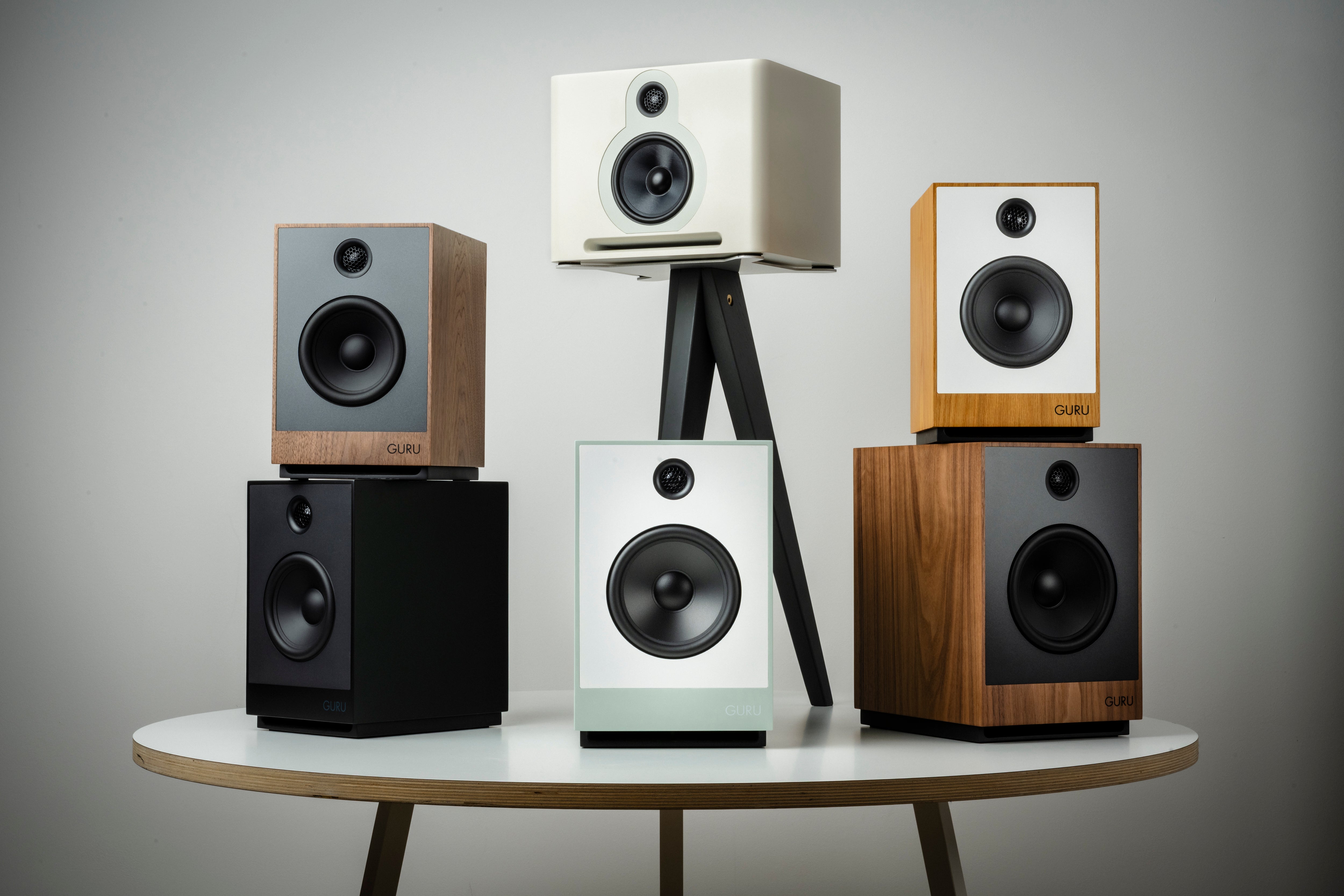
Guru. Designed in Stockholm, built in Europe, so CETA applies and the border asks nothing. Small boxes that go against the wall on purpose, which means they go where your living room actually has space, which means the person you live with doesn't lodge a formal complaint. I have never carried a product that so reliably makes a grown adult walk over to the wall, look behind the speaker, and say "hang on."
Ophidian. Made in England by one man with a very specific grudge against the laws of cabinet volume. Zero at the border. In a crowded bracket where most of the field is buying the same Danish drivers and arguing about veneer, he went and engineered his own way of getting air out of a box, and the result is a standmount that behaves like the model above it. Nobody's heard of him. This year, that's not a bug, that's a passport.
Soulnote. Japanese, and here's where I allow myself a small smile, because under the CPTPP a Soulnote DAC or amplifier clears Canadian customs at zero, out of a factory in Kanagawa that isn't paying a tariff on a single component inside it. Soulnote is a room full of ex-Marantz engineers who decided that negative feedback was a character flaw and built an entire product line to prove the point. It is the most alive-sounding digital I've heard at the money, and I've heard an indecent amount of digital. If you've ever wondered what "fully balanced" actually means when someone isn't just trying to sell you a cable, they'll show you. And they're on nobody's list, which — say it with me — is a feature.
I could go on. Ruark from Essex, Unitra from Warsaw, Unison Research from Treviso. Every one of them crosses into Canada without paying a cent of duty, and not one of them had to do anything clever to arrange it. They just weren't born next door.
The part I'll probably regret
A trade war is a bad thing. I want that on the record, because the rest of this could be read as cheerful and I am not cheerful. American shops are going to lose Canadian and European lines. Canadian shops are going to lose American ones. Some of those lines are the best in the world and the people who build them did nothing to deserve any of this. The Danes were merely the first out the door; they were growing when they left, which tells you how far the fixed costs had got ahead of the sales. There will be others. Each one is a loss, and I'll feel each one.
But I'm a distributor, not a diplomat, and the distributor's job is to look at the board as it is rather than as it ought to be. As it is: the cost of getting into this hobby, for a Canadian, is going up on one side of the shop — quietly, in the factory, before the tape goes on the box — and standing still on the other. The middle of the market is about to get thinner for American brands. If the trade does its job for once, it gets a little thicker for British, European and Japanese ones.
So if you're the person who was going to save up this year for one good thing — one properly made, will-outlive-the-dog component — this is the year to buy it from somewhere that isn't charging you for a war.
Elbows up. Ears open. And listen before you buy anything, for God's sake. Even now, that's still the point.
Follow the series: every instalment is collected under Listening Room Confidential, and the rest of the Notebook lives here.
Next in the series: How to Listen — a record chosen by somebody else, the second-best seat, and a few notes on manners before the Toronto Audiofest.
FAQ in brief
Are hi-fi speakers and amplifiers on Canada's September 8 counter-tariff list?
No. Finished loudspeakers, amplifiers, headphones, turntables, CD players and streamers (HS 8518, 8519, 8527) are not on the schedule as of publishing. The electronics lines that are include smartphones and network routers at 50%, small kitchen appliances at 25%, and certain replacement parts for receivers at 25%.
Why is some European or Japanese hi-fi more expensive in Canada than it should be?
Because it was imported into the United States first. Brands whose North American distribution is run from a US warehouse pay the American tariff when the container clears US customs, then pass that cost along when stock is trucked into Canada. Brands imported directly from the factory by a Canadian distributor enter duty-free under CETA, the Canada–UK agreement, or the CPTPP and carry no US tariff. Ask your dealer who imports the brand and from where, or find an Audionation dealer.
Will American-made hi-fi get more expensive in Canada anyway?
Very likely. US manufacturers pay American tariffs on the imported parts inside their products — transformers, capacitors, chips, chassis — and those costs are passed on before the product ever reaches the Canadian border. Component shortages driven by AI data-centre demand are adding to that. European, British and Japanese factories don't carry those costs, and their products enter Canada duty-free.
Are European speakers and amplifiers tariff-free in Canada?
Yes. Under CETA, goods originating in the EU enter Canada at zero duty; the Canada–UK Trade Continuity Agreement extends the same to British-made products. That covers brands built in Sweden, Poland, Italy, and England.
Do Japanese hi-fi products have tariffs in Canada?
No. Under the CPTPP, Japanese-origin audio equipment enters Canada duty-free.
Which hi-fi brands are not made in the United States?
Among the lines Audionation distributes: Exposure, Ophidian, and Ruark are British; Guru is Swedish-designed and built in Europe; Unitra is Polish; Unison Research is Italian; Soulnote is Japanese.
Is the Dynaudio exit related to the tariffs?
Dynaudio cited "economic challenges and market uncertainty" and trade analysts point to tariff costs on Danish-made goods entering the US as a major factor. Its North American exit takes effect in fall 2026. A separate piece on what that means for Canada is coming.
About the author
I've been in and around the audio business for more than forty years. My business card says Founder, which is what you call the person who was in the room before anyone thought to give out titles — hell, before anyone else was in the room at all. Music plays all day, every day, and four decades in, the job is still sitting down and listening to records, or streaming if I don't want to get up. Tell me, what's better than that?
Jeff, Audionation
Founder

Has Hi-Fi Lost the Plot?
How to Listen